



Story Highlights
- Homemade pet food often lacks essential nutrients to provide a balanced meal that meets nutritional standard
- Nutritional imbalance creates hidden deficiencies, causing serious health issues over time
- Balanced nutrition needs precise calculations to ensure adequate nutrients through all life stages
- Well-designed real food recipes provide exact ingredients, caloric density, and complete nutrient analyses, allowing safe protein rotation when recalculated correctly
Over the last twenty-five years, I have watched more pet parents move away from ultra- processed commercial pet food and toward homemade diets made with real, recognizable ingredients. This shift is driven by love, concern, and a desire to do better for companion animals, and I fully support that intention. However, good intentions alone do not guarantee good outcomes. New research from the Dog Aging Project1 highlights a critical truth that integrative veterinarians have been warning about for years: most homemade diets are nutritionally incomplete, and over time, those deficiencies can quietly undermine a pet’s health.
The study, published in the American Journal of Veterinary Research2, evaluated 1,726 homemade dog diets submitted by pet owners. Researchers found that only six percent had the potential to meet basic nutritional requirements. That number may actually be lower, because exact ingredient amounts were not provided. This does not mean homemade diets are a bad idea. It means that formulating a biologically appropriate, complete diet requires more than muscle meat, bones, vegetables, and a splash of oil. Nutrition is chemistry, and the body depends on a steady stream of nutrients that cannot be guessed or improvised.
Why Nutritional Completeness Matters
Dogs and cats can appear outwardly healthy for months or even years while consuming a deficient diet. During that time, their bodies compensate by pulling minerals from bone, altering hormone signaling, and suppressing nonessential functions. Eventually, those compensations fail. The result may be orthopedic disease, kidney dysfunction, immune suppression, neurological changes, or accelerated aging.
The Dog Aging Project team used a tool called Balance It, which aligns with AAFCO nutrient standards, to evaluate each diet for missing nutrients. Calcium was one of the most commonly deficient minerals, and this is particularly concerning for young animals. When calcium and phosphorus are out of balance, dogs can develop secondary nutritional hyperparathyroidism, sometimes referred to as rubber jaw syndrome. Bones lose density and strength, teeth loosen, and kidney damage can follow. This is not a rare or theoretical risk. I see it clinically, especially in dogs fed meat-heavy homemade diets without appropriate mineral balancing.
Nutrition becomes even more critical when a pet is already ill. Dogs with kidney disease, arthritis, inflammatory bowel disease, or cancer are far less able to tolerate imbalances. In these cases, an incomplete homemade diet can worsen symptoms and shorten lifespan rather than improve quality of life.
The Difference Between Real Food and Random Food

One of the biggest mistakes well-meaning pet parents make is assuming that whole foods automatically equal balanced nutrition. Real food is essential, but it must be assembled with intention. Substituting one oil for another, skipping a supplement because it feels unnecessary, or rotating ingredients without recalculating nutrient content can radically alter the nutritional profile of a diet.
Nothing in a properly formulated homemade diet is filler. Every ingredient has a purpose. Oils provide specific fatty acids. Organs supply fat-soluble vitamins and specific herbs and spices provide trace minerals. Bones or mineral supplements balance calcium and phosphorus. When one component is removed or swapped without adjustment, the entire nutritional equation changes.
This is where professional guidance matters. Board-certified veterinary nutritionists undergo years of advanced training specifically in nutrient formulation. Working with one to create a therapeutic diet for a sick pet does not mean abandoning fresh food, it means respecting the complexity of biology. There are also many veterinarians and other health professionals who use the Animal Diet Formulator (ADF) to create custom, nutritionally complete meals for puppies, kittens, and adult pets, or pet owners can use the software themselves to ensure the nutritional adequacy of the meals they create.
Understanding Optimal Nutrient Recommendations and Why They Matter
This is where the work of Steve Brown becomes incredibly valuable. Steve is a long-time advocate for fresh feeding and created the commercial raw and freeze-dried categories in the pet food industry. As an analyst, he’s spent over thirty years evaluating the evolving landscape of pet food formulation. He emphasizes the merits of Optimal Nutrient Recommendations, often referred to as ONR. The idea behind ONR is simple but profound: health depends not only on individual nutrients but also on how those nutrients interact with one another and on the amounts required at different stages of life and activity levels.
For example, calcium cannot be evaluated without phosphorus. Zinc status is influenced by copper. Vitamin D affects calcium absorption and immune regulation. Omega 3 and omega 6 fatty acids must be in balance to regulate inflammation. When nutrients are present in the wrong ratios, even if total amounts appear adequate, physiological dysfunction can occur.
Steve Brown’s approach focuses on meeting nutrient requirements through whole foods first, then using targeted supplementation only where necessary. This aligns closely with how I practice integrative medicine. ONR-based formulations help prevent the long-term consequences of subtle imbalances that are common in poorly designed homemade diets.
Using ONR principles means resisting the urge to over or under-supplement or guess. It also means understanding that a highly active and a very sedentary twenty-pound dog require very different caloric intakes, yet the same amounts of vitamins, minerals, and antioxidants to remain healthy over time. Food that’s been formulated for “all life stages” means it has enough phosphorus for growing animals, which isn’t ideal for seniors whose kidneys may benefit from less phosphorus; ONR wisely takes these considerations into pet food formulation.
Real Food Recipes With Built-In Safety
For pet parents interested in preparing real food meals at home, start with complete recipes developed by professionals who understand nutrient ratios pertaining to life stage and activity levels. These recipes specify exact amounts of ingredients, take into account nutrient losses from different preparation methods, and show the amounts of specific supplements needed to make the recipe nutritionally complete and balanced.
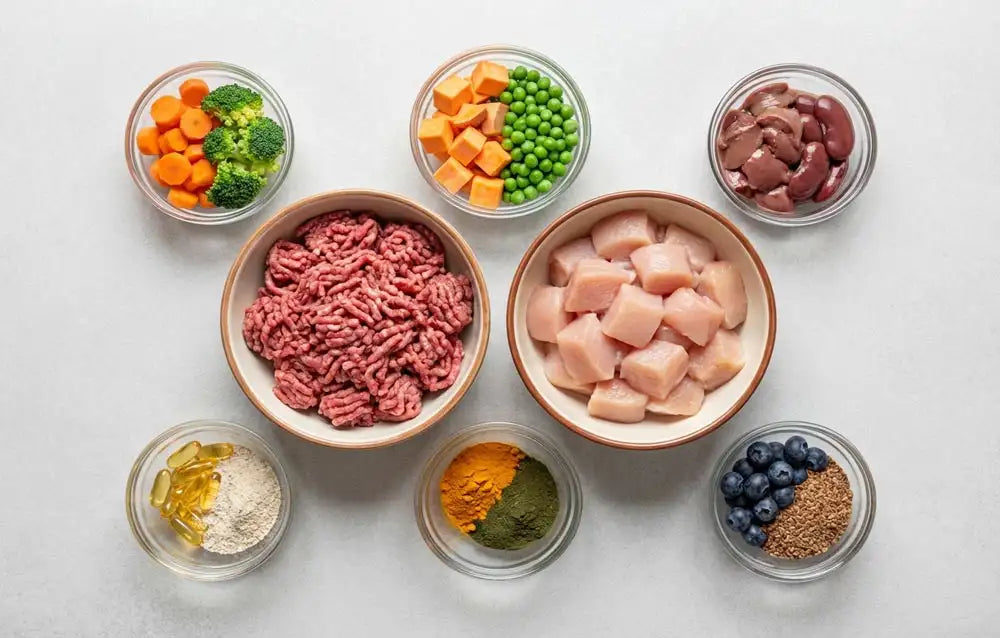
Well-formulated recipes also list the number of calories per gram or ounce, and provide a complete nutritional analysis of the recipe, including the amounts of amino acids, fatty acids, vitamins, and minerals. Once you choose a well-formulated recipe, follow it precisely (if you’re looking for raw or cooked recipes that have been formulated correctly for puppies, kittens or adult pets, you can check out my latest recipe book, the Forever Dog LIFE.)
A balanced gently cooked dog recipe might include a defined amount of 90% lean ground turkey, a specific weight of certain veggies for microbiome support, measured amounts of liver and heart, a calculated dose of fish oil for EPA and DHA, vitamin E to prevent fat oxidation, an iodine source, and a calcium source matched to the phosphorus content of the meat. For cats, a complete recipe may include chicken thighs with skin, heart, liver, egg yolk, taurine and omega 3 supplementation, a fiber source and specific amounts of added vitamins and minerals.
If you want to rotate proteins, each new recipe must be formulated around the amino acid levels and fat content of the new protein. Rotation without recalculation is one of the fastest ways to create deficiencies.
Avoiding Common and Dangerous Mistakes
Some ingredients should never be included in homemade diets or treats. For instance, onions, grapes, and raisins are toxic to pets. Cooked bones can splinter and cause internal injury. Excessive liver can lead to vitamin A and copper toxicity. Excessive amounts of edible bones in the diet or calcium supplementation can be as harmful as a deficiency. General pet multivitamins or “supergreen foods” (i.e. spirulina) do not adequately address deficiencies in recipes. Cats should never be fed dog food or plant-based diets, even short term. These mistakes are rarely malicious. They are usually the result of misinformation or oversimplified advice circulating online.
Real Food With Responsibility
Homemade diets can be one of the most powerful tools we have to support longevity, metabolic health, and quality of life in dogs and cats. But real food must be paired with real science. The Dog Aging Project study is not a warning against homemade diets. It is a reminder that biology does not reward guesswork.
When you combine species-appropriate, fresh, wholesome ingredients, thoughtful recipe formulation, and customized supplementation, homemade diets can offer exceptional benefits that ultra-processed foods simply cannot. When done right, real food nourishes all your pet’s organ systems and the deep biological resilience on which our animals depend. Feeding with intention, education, and respect for nutritional complexity is one of the most meaningful ways we can honor the lives entrusted to us.
Sources and References:
About Karen Shaw Becker, DVM, CVH, CVA, CCRT
Veterinarian Dr. Karen Shaw Becker believes biologically appropriate food and an animal's immediate environment are essential in determining health, vitality, and lifespan. She has spent her career as a wildlife and exotic animal veterinarian and small animal clinician, empowering animal guardians to make intentional lifestyle decisions to enhance the well-being of their animals.


