



Story Highlights
- Where a dog lives significantly influences daily environmental exposures that shape long-term health
- Regional differences in climate, parasites, water quality, and chemical use create distinct biological pressures
- Cancer, neurologic, and digestive conditions show similar rates nationwide, suggesting broader lifestyle and aging influences
- Prevention is most effective when tailored to your dog’s geography, combining environmental awareness with proactive care
One of the most powerful influences on your dog’s health is something you may never have considered. It is not just diet, genetics, or even just lifestyle. It’s geography.
A recent publication from the Dog Aging Project1, published in the American Journal of Veterinary Research2, evaluated data from 47,444 dogs across the United States. The researchers wanted to understand whether environmental exposures and health conditions differ depending on where a dog lives.
The answer was clear. They most certainly do. This research offers some valuable insight. It gives us a national health map for dogs. And what it shows confirms what many of us in integrative and functional medicine have long observed in clinical practice. Environment impacts and shapes biology.
Location Influences Daily Lifestyle and Exposure
Dogs in the Northeast, Midwest, South, and West experience very different environmental conditions. Inside the home, there are differences in heating sources, indoor air quality, flooring materials, and chemical exposure. Outside the home, there are differences in yard pesticide and herbicide use, regional parasite burdens, humidity levels, climate stressors, and the types of water dogs swim in and drink.
A dog swimming in freshwater lakes in one region faces different microbial exposures than a dog swimming in saltwater on the coast. A dog living in a humid climate experiences different skin microbiome challenges than a dog in an arid region. Dogs living in areas with heavy lawn pesticide exposures encounter different chemical stressors than dogs in a rural untreated environment.
These exposures are not theoretical. They accumulate over years. And they matter. The high variation in environmental characteristics across U.S. regions indicates dogs are living biologically different lives depending on where they reside.
Disease Patterns Can Shift by Region
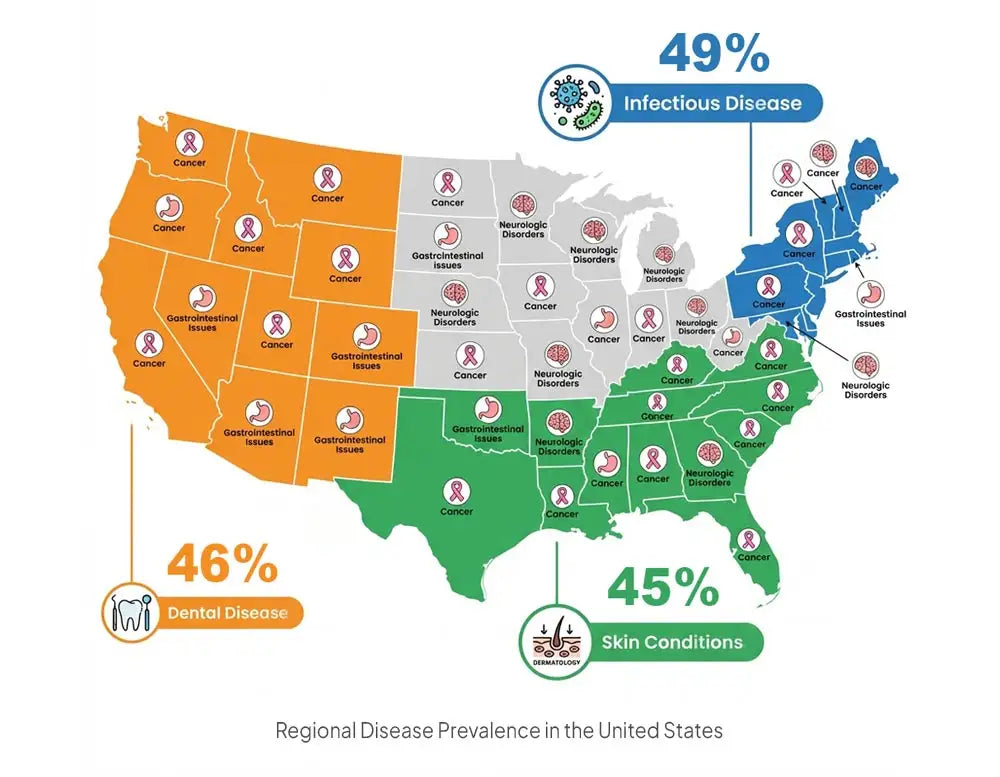
The most striking findings were not just about exposure differences. They were about disease prevalence. Certain health conditions appeared disproportionately in specific regions. Infectious diseases were most prevalent in the Northeast, affecting 49 % of dogs in that region. Dental disease was highest in the West, affecting 46% of dogs. Skin conditions were most prevalent in the South, affecting 45% of dogs.
Meanwhile, other conditions such as cancer, neurologic disorders, and gastrointestinal diseases showed relatively consistent prevalence across all regions. This tells us something important. Not all diseases are equally influenced by geography. Some are highly sensitive to environmental conditions. Others appear to be driven more by factors that transcend region, such as genetics, aging, or widespread lifestyle patterns.
Interestingly, one variable did not differ much at all. Activity levels were consistent across all regions. Dogs, regardless of where they lived, had similar general activity patterns. Meaning the disease differences were not explained simply by exercise variation.
Why Are Infections Higher in the Northeast?
The Northeast has a well-documented tick burden. Tick-borne diseases thrive in wooded, humid environments. Fleas and certain parasitic infections are also regionally influenced by climate. When infection prevalence approaches half of the canine population in a region, it tells us environmental pathogen pressure is substantial.
If you live in the Northeast, proactive infection monitoring is critical. Regular screening for tick-borne illnesses, thoughtful, non-toxic parasite prevention strategies, and early immune support become essential components of care. Check for ticks daily, and don't overlook areas of your pet's body where ticks can hide, like between the toes, the underside of the toes, in the earflaps and around the tail base.
Many tick-borne diseases require a tick to be attached for 24 hours before transmission occurs, which is why daily tick checks and immediate removal are so important. But some infections can spread faster, so prevention and prompt removal should always be combined for the best protection.
If you prefer to err on the side of extreme caution, you can check your pet for ticks each time he may have been exposed (in other words, each time he visits an area outdoors that may harbor ticks). This is hands-down the safest and entirely nontoxic method of tick prevention.
There are dozens of natural tick deterrents on the market, and although none of them will prevent 100% of tick bites 100% of the time, they may make your dog a less desirable target. Reducing the number of ticks on your dog by 50% to 80% is most certainly better than nothing, in my opinion.
In tick-endemic regions, many veterinarians, including myself, recommend screening dogs every 6 months with blood tests such as a 4DX or Accuplex panel. These tests look for exposure to common vector-borne diseases like Lyme, Anaplasma, Ehrlichia, and heartworm, allowing problems to be identified early, often before symptoms appear. Regular screening works best when combined with daily tick checks, prompt removal, and parasite prevention strategies.
Dental Disease Is Highest in the West
The elevated rate of dental disease in the West raises important questions. Dental health is influenced by multiple factors, including water mineral content, diet composition, chewing behavior, and preventive care practices. Regional differences in water hardness, lifestyle habits, and feeding patterns may all contribute.

Dental disease is not cosmetic. It is inflammatory. Oral bacteria can enter circulation and influence heart, kidney, and systemic health. Periodontal disease remains one of the most common chronic conditions affecting dogs, especially as they age and particularly in small and toy breeds. While mechanical plaque removal and tooth brushing remain important tools, they only address the surface of the problem. Beneath plaque and tartar lies a deeper issue: disruption of the oral microbiome.
Modern microbiome science has transformed how we understand canine oral health. Periodontal disease is no longer viewed as the result of a single “bad” bacterium, but as a shift in the entire microbial community; an ecological imbalance that favors inflammatory, tissue-damaging biofilms. This insight opens the door to a more elegant, biologically aligned solution: restoring balance with beneficial microbes.
Among the most promising tools for this purpose are oral probiotics, particularly specific strains of Lactobacillus that support microbial balance, immune signaling, and biofilm regulation. Three strains deserve special attention for canine oral health: Lactobacillus reuteri, Lactiplantibacillus plantarum LP815, and Lactobacillus rhamnosus.
If you live in the West, dental hygiene deserves serious attention. Regular oral exams, home brushing, appropriate chew strategies, and professional cleaning should not be optional. They are foundational preventive medicine.
Skin Conditions Are Most Common in the South
The South presents a perfect storm for dermatologic challenges. Heat, humidity, flea populations, environmental allergens, and mold exposure all contribute to skin barrier stress. Skin is not just an outer covering; it is an immune organ. When the skin barrier is compromised, inflammation escalates and secondary infections follow.
When I’m supporting pets with seasonal allergies, I often begin with quercetin, a plant-based bioflavonoid known for its anti-inflammatory and antioxidant benefits. I frequently refer to it as nature’s antihistamine because it helps stabilize mast cells and reduce histamine release, which is responsible for the redness, swelling, itching, and irritation we see during allergic flare-ups. To enhance its effectiveness, I combine quercetin with the proteolytic enzymes, bromelain and papain. These enzymes improve quercetin absorption and provide additional anti-inflammatory support by helping reduce prostaglandin activity, which contributes to discomfort and inflamed mucous membranes.
If you live in the South, early attention to itching, redness, ear inflammation, and recurrent skin infections is essential. Strengthening the skin barrier through proper nutrition, reducing chemical exposure, managing parasites thoughtfully, and supporting the microbiome can dramatically change outcomes.
Just rinsing antigens and irritants off the skin can be an incredibly beneficial hack to help miserable pets get through the summer. Following up with a skin microbiome reset rinse can extend the benefits of simple irrigation therapy (this solution can also be applied to a cotton ball for swabbing out irritated, inflamed, ears).
My Skin Balancing Probiotic Rinse Recipe
If your pup is prone to staph infections, hotspots, or yeast, using this post-bath rinse is a great way to reduce their risk of summer-long flare-ups.
Ingredients:
- 1/2 cup plain kombucha tea
- 1 cup green tea
- 1 cup peppermint tea
- 1/2 cup witch hazel
- 1/2 tablespoon colostrum powder
- 1 teaspoon probiotic powder (spore-forming/soil-based probiotic powder is best)
Directions:
- Combine ingredients in a bowl, mixing well. Or put mixture into a spray bottle.
- Pour or spray over your pet from the neck down. Avoid the eyes.
- Rub into skin and towel dry. Do not rinse.
What Remains the Same
Not every condition varies by geography. Cancer rates, neurological conditions, and digestive diseases typically appear at similar rates throughout the country. This suggests that some chronic diseases may be influenced less by location, but even more by shared factors such as aging, ultra-processed diets, environmental contaminants, genetics, and lifestyle patterns.
I view this research as a roadmap that highlights the risks your dog is more likely to encounter by geography. Regardless of your location, it’s important to stay vigilant in all areas of health for your beloved companion. Be proactive about ways to safeguard their oral health, skin health and gut health. Always be mindful of everyday exposures to low-level toxins from air, water, food, bedding, household cleaners, lawn treatments, plastics, pharmaceuticals, pesticides in flea and tick preventives. Prevention works best when it is personalized. When we combine awareness with intentional care, we give our dogs a strong foundation for a vibrant, healthy life.
Sources and References:
About Karen Shaw Becker, DVM, CVH, CVA, CCRT
Veterinarian Dr. Karen Shaw Becker believes biologically appropriate food and an animal's immediate environment are essential in determining health, vitality, and lifespan. She has spent her career as a wildlife and exotic animal veterinarian and small animal clinician, empowering animal guardians to make intentional lifestyle decisions to enhance the well-being of their animals.


