



Story Highlights
- 77% of tested pet foods contained detectable mycotoxins, pesticides, or bioactive compounds
- Dry kibble carried a significantly higher chemical burden than wet, meat-based diets
- Multiple mycotoxins were detected in the same formulas, raising concern for additive toxic effects
- Ingredient sourcing and processing methods directly influence your pet’s daily toxic exposure
- Mycotoxin poisoning is a medical emergency, but most mycotoxin exposure occurs without resulting in acute symptoms
Choosing what to feed your pet is an act of love. You read labels, compare brands, and trust that what you place in your dog or cat’s bowl is safe and nourishing. A recently published scientific study1 raises uncomfortable but important questions about that trust and about what may be quietly riding along with everyday pet meals.
Researchers evaluated 65 commercially available dog and cat foods (33 dog foods and 32 cat foods), including both dry and wet formulations, to screen for a wide range of organic contaminants. What they found was a complex pattern of contamination involving mycotoxins, pesticides, pharmaceutical residues, and plant-derived bioactive compounds. While this study does not measure exact exposure levels or prove harm, it offers a sobering early warning about how modern pet foods are sourced, processed, and formulated.
Why This Study Was Different Than Most
Most pet food testing focuses on single contaminants or known hazards. This study took a broader approach, using high-resolution mass spectrometry to screen for multiple chemicals at once, even when reference standards were not available. That matters because pets do not eat one ingredient or one chemical at a time. They eat the same food day after day, often for months or years, and real-world exposure involves mixtures, not isolated compounds.
The study found that nearly 77 percent of all tested foods had detectable mycotoxins. Dry foods were particularly affected, with contamination patterns strongly linked to cereal based ingredients. Pesticides were detected in 72% of dry foods, while wet foods showed far lower levels. Plant-based bioactive compounds, including phytoestrogens with hormone-like activity, were found in more than half of all samples. Pharmaceutical residues were less common but still present, primarily in dry foods.
Understanding Mycotoxins and Why They Are So Common
The term “mycotoxin” is derived from the Greek words “mykes” for fungi”, and “toxicum” for poison”. Mycotoxins are toxic chemical substances produced by certain types of fungi that infect crops, and U.S. pet food manufacturers are advised to monitor the quality of these ingredients going into their products. Exposure can lead to disease and death in both humans and animals.
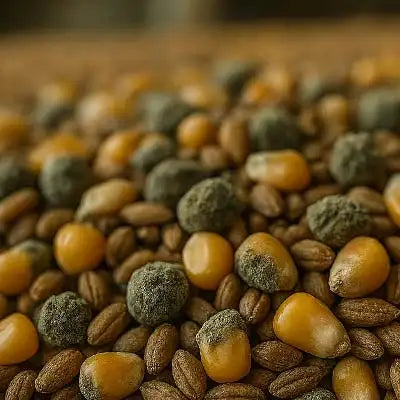
These toxic compounds grow on crops such as corn, wheat, rice, and legumes. The invisible molds can develop before harvesting, during storage, or even during processing. Once present, mycotoxins are remarkably stable. They can survive heat, pressure, and time, which means they can persist all the way into finished a finished product, such as your pet’s food.
In this study, aflatoxins were the most frequently detected mycotoxin. Dry dog food showed excessive aflatoxins present in 9 of the 14 samples tested. Aflatoxins are quite dangerous to both dogs and cats. Prolonged exposure can negatively impact the liver’s ability to function properly, potentially resulting in cancer2.
Mycotoxins are also known to suppress immune response, disrupt gut integrity, and increase cancer risk with chronic exposure. Cats are especially vulnerable because they have limited ability to detoxify certain compounds compared to dogs.
Perhaps most troubling is the frequent occurrence of multiple mycotoxins in the same food. Toxicology research increasingly shows that mixtures can have additive or even synergistic effects, meaning the combined impact may be greater than the sum of individual compounds.
Symptoms of Aflatoxin Exposure or Acute Mycotoxin Poisoning
If your dog or cat ingests food contaminated with mycotoxins, you can anticipate one or more of the following symptoms3:
- Lack of appetite
- Severe, persistent vomiting
- Loss of coordination or seizures
- Bloody diarrhea
- Panting
Mycotoxin poisoning is a true medical emergency. If you suspect acute exposure, your pet needs immediate treatment and likely hospitalization. Your veterinarian must take early and aggressive action to remove the toxic substances from your pet’s body. Be sure to express your concern as your vet may not correlate these symptoms to mycotoxin poisoning from her food or treats.
Most mycotoxin exposure occurs without resulting in acute symptoms, however, which can make it even more dangerous. Acute exposure allows pet parents to seek emergency veterinary care, identify food as the culprit and discontinue feeding.
Why Dry Foods Carry a Higher Chemical Burden
This study highlights the stark difference between dry and wet foods. Dry foods showed far higher diversity and frequency of contaminants across nearly every category.
This is largely driven by ingredients. Dry foods rely heavily on grains, legumes, and plant proteins. These crops are more vulnerable to fungal contamination and are commonly treated with pesticides during cultivation and storage. Many pesticides detected in this study, such as pirimiphos-methyl and tridemorph, are associated with grain protection during storage rather than field application alone.
Low moisture also plays a role. Dry foods are designed to be shelf-stable, which often means longer storage times. Pesticides are frequently used to prevent insect infestation in stored feed ingredients, increasing the likelihood of residue carryover into finished products.
Wet foods, by contrast, are generally more meat based and contain far fewer cereal ingredients. Their higher moisture content and different processing pathways appear to reduce the diversity of detectable contaminants, though they are not completely free of them.
Plant Based Bioactive Compounds and Hormonal Concerns
A concerning finding was the widespread detection of plant-based bioactive compounds, including phytoestrogens such as genistein and formononetin, detected in 51% of samples. These compounds are naturally present in legumes and some grains and are not inherently toxic in all contexts. However, they do have documented hormone like activity.
In dogs, chronic exposure to phytoestrogens may influence endocrine balance, especially in neutered animals. In cats, the concern is even greater. Cats are obligate carnivores with limited capacity to metabolize plant compounds. Introducing hormonally active plant metabolites into feline diets raises questions about long-term reproductive, metabolic, and immune effects.
These compounds are not routinely monitored or regulated in pet food, yet they appeared in more than half of the tested products, often alongside mycotoxins and pesticides. This layered exposure is precisely what early warning screening is designed to highlight.
Pharmaceutical Residues in Pet Food
Pharmaceuticals were detected less frequently, but their presence deserves attention. Antibiotics such as sparfloxacin were tentatively identified in several dry foods. These residues likely originate from animal derived ingredients sourced from livestock treated with antibiotics.
Even low level, chronic exposure to antibiotics through food raises concerns about microbiome disruption and antibiotic resistance. While this study cannot quantify risk, it underscores the importance of ingredient sourcing and transparency in animal protein supply chains.
How You Can Protect Your Pet
There are practical steps you can take to reduce your pet’s exposure burden. Support your pet’s gut health. A resilient gut and microbiome play a critical role in detoxification and overall immune regulation.
Prioritize fresh, species-appropriate, and minimally processed foods whenever possible. Raw and gently cooked meat-based diets can eliminate exposure to grain-based ingredients that are vulnerable to fungal and pesticide contamination.
Most commercially available grain-based kibble is made with grains unfit for human consumption. Choose pet food brands made with human-grade ingredients. This information will be on the product label or website, as human-grade pet foods are proudly made with traceable ingredients.
Sources and References:
About Karen Shaw Becker, DVM, CVH, CVA, CCRT
Veterinarian Dr. Karen Shaw Becker believes biologically appropriate food and an animal's immediate environment are essential in determining health, vitality, and lifespan. She has spent her career as a wildlife and exotic animal veterinarian and small animal clinician, empowering animal guardians to make intentional lifestyle decisions to enhance the well-being of their animals.


