


Prime Enzymes™
- Fresh until February 2029


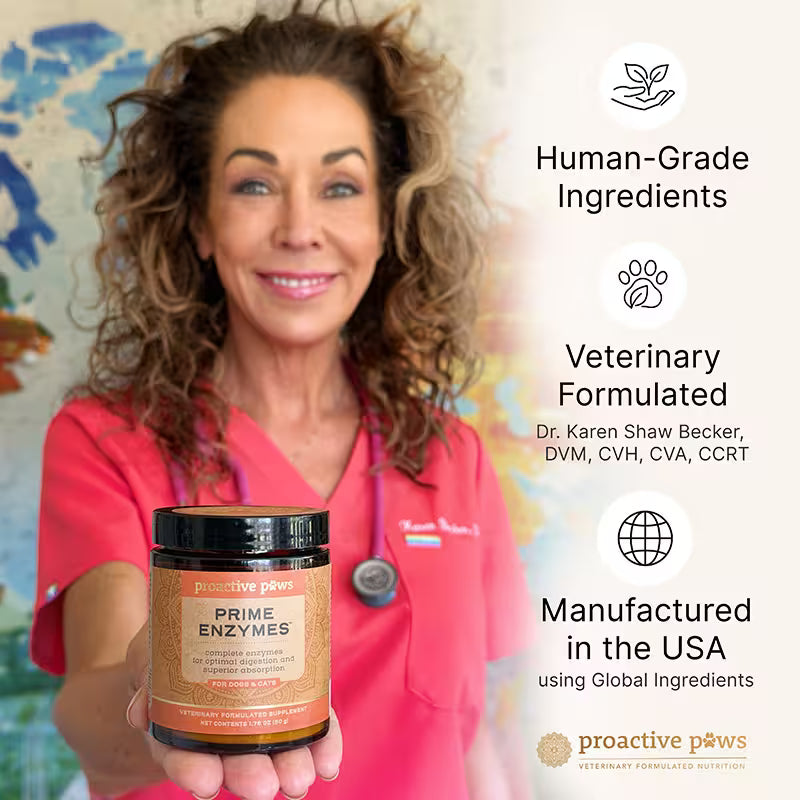
Prime Enzymes
Digestive support the way nature intended, adapted for modern pets.
Digestion is the gateway to health. Before any vitamins, minerals, amino acids, or fatty acids can nourish the body; they must first be properly broken down. When digestion fails at any point, nutrients can be lost, inflammation builds, and even high-quality foods can become a source of illness rather than healing.
Good Digestion Isn’t Optional. It’s Essential.

Today’s dogs and cats face digestive challenges their biology was never designed for: ultra-processed diets, enzyme-dead foods, chronic stress, medications, environmental toxins, and repeated inflammatory insults that quietly erode digestive capacity over time. When digestion falters, nutrients are wasted, fermentation increases, inflammation builds, and the gut becomes a source of stress instead of strength.
Prime Enzymes delivers comprehensive daily digestive support by restoring the enzymatic tools needed to properly break down proteins, fats, carbohydrates, fibers, and sugars at every meal. By improving digestion at its foundation, it helps reduce fermentation and inflammation, protect vulnerable organs like the pancreas and gallbladder, and support comfort, resilience, and long-term gut health, because in the modern world, daily enzyme support isn’t an upgrade, it’s a necessity. Prime Enzymes was created to support the most overlooked yet essential foundation of health: Effective digestion.
The Digestive Process and Where It Breaks Down
Digestion is a coordinated sequence, not a single event. Food enters the stomach, where strong stomach acid and enzymes begin breaking proteins into smaller components and signaling the rest of the digestive tract to prepare. From there, partially digested food moves into the small intestine, where bile and pancreatic enzymes complete digestion so nutrients can be absorbed safely and efficiently.
When this process is hindered, everything downstream suffers. Food lingers too long, breaks down incompletely, ferments excessively, and feeds the wrong microbes. Gas, bloating, reflux, inflammation, and nutrient loss are not random events; they are signs that digestion is not working as designed.
Why Pets Eating Cooked or Ultra-Processed Diets Struggle with Stomach Acid

Functional medicine veterinarians often find pets eating dry or ultra-processed diets are especially vulnerable to digestive breakdown because these foods fundamentally disrupt the stomach’s ability to do its job. Kibble and other ultra-processed foods are moisture-deficient, subjected to multiple high-heat processes and pressure that destroy naturally occurring enzymes, and rely on synthetic vitamins, emulsifiers, dyes, and preservatives to remain shelf-stable.
While meat may appear near the top of the ingredient list, the cumulative carbohydrate content from refined starches often reaches 30–60% of the formula, an amount far beyond what dogs and cats require for health (zero), and one that fundamentally alters digestive physiology. Starch-heavy diets reduce the stimulus needed for robust hydrochloric acid secretion. Over time, the stomach adapts by producing less acid, a condition known as hypochlorhydria, which is one of the most common yet overlooked causes of indigestion.
Adequate stomach acid is essential for digestion, particularly for carnivores. Hydrochloric acid denatures dietary proteins, unfolding their complex structures so enzymes like pepsin can begin breaking them down into absorbable peptides. When acid levels are insufficient, proteins can remain partially digested, linger in the stomach longer than intended and enter the small intestine in a form that is difficult to process. This incomplete digestion process increases fermentation, gas production, bloating, and reflux-like symptoms, while also triggering inflammatory and immune responses further down the gut. Low stomach acid also compromises the stomach’s role as a biological gatekeeper; acid normally suppresses pathogenic microbes and signals the release of pancreatic enzymes and bile downstream. When acidity is inadequate, these signals weaken, leading to poor coordination between the stomach, pancreas, gallbladder, and small intestine.
The result is a cascade effect. Impaired protein digestion feeds bacterial overgrowth, increases intestinal permeability, and places added stress on the pancreas to compensate for what the stomach failed to do. Ironically, symptoms such as reflux, burping, lip licking, and discomfort after meals are often mistaken for excess acid, when in reality, they are signs of insufficient digestive power.
Low stomach acid is a common but under-recognized problem in pets. Without sufficient acidity, proteins are not properly denatured, key digestive steps stall, and this commonly leads to reflux and GERD-like symptoms. Licking, gulping, burping, grass eating, restlessness after meals, and nighttime discomfort are often not signs of too much acid, but too little digestive power.
Suppressing stomach acid may temporarily quiet symptoms, but it further impairs digestion and worsens the underlying problem. Long-term, acid deficiency becomes a central driver of indigestion, malabsorption, microbiome imbalance, and chronic gastrointestinal discomfort, making restoration of proper digestion, rather than suppression of stomach acid, a critical piece of true gut support. Digestive enzymes help compensate for this loss of digestive capacity, supporting a more complete breakdown of food and reducing the mechanical and chemical triggers for reflux.
Why Fresh and Raw-Fed Pets Often Lack Adequate Lipase

Pets eating meat-based, fresh, or raw diets often face a different challenge. While these unheated diets contain naturally occurring enzymes from meat and vegetables, they lack sufficient lipase, the enzyme required to efficiently digest fats.
In nature, carnivores obtain a substantial portion of their digestive enzymes from their prey’s pancreas, the richest natural source of digestive enzymes. Modern feeding rarely includes fresh pancreas at every meal. As a result, even pets eating biologically appropriate diets often struggle to fully digest fats.
Inadequate fat digestion places stress on the pancreas, gallbladder, and bile system, contributing to bloating, greasy stools, gallbladder sludging, and pancreatic inflammation. My first suggestion is to feed fresh pancreas at every meal, but this isn’t feasible for the vast majority of pet parents, so supplementing their diet with digestive enzymes helps restore what’s missing from an ancestral, fresh food diet, allowing fats, proteins, and carbohydrates to be broken down efficiently without overburdening digestive organs.
The Hidden Epidemic of Digestive Dysfunction in Pets
Digestive problems are now among the most common chronic complaints in veterinary practice. Gas, bloating, reflux, sensitive stomachs, chronic loose stools, pancreatitis, gallbladder issues, and SIBO (small intestine bacterial overgrowth, usually with E. coli or Clostridium) are no longer rare. They are increasingly seen in young pets, healthy-appearing pets, and pets eating “premium” diets. Many of these issues share a common root: enzyme insufficiency. Digestive enzymes address this foundational problem by improving digestion at the earliest stages, reducing fermentation, lowering inflammatory burden, and improving nutrient absorption.
Support for Sensitive Stomachs, Gas, and Bloating
When food is not fully broken down, gut bacteria ferment undigested carbohydrates and proteins, producing gas and bloating. Enzymes help reduce this fermentation before food reaches bacteria that produce excess gas. Many pet parents notice less bloating, fewer digestive noises, improved stool quality, and greater comfort after meals.
Relief for Reflux (GERD) and Indigestion
Reflux is often a sign of delayed digestion, poor motility, or incomplete breakdown of food. By supporting efficient digestion and stomach emptying, digestive enzymes reduce pressure, irritation, and reflux-triggering conditions. This approach supports digestion rather than suppressing it, addressing the root cause of indigestion instead of masking symptoms.
Support for Gallbladder Sludging and Bile Flow
Gallbladder dysfunction is an increasingly common and underrecognized problem in modern pets. Sludging, thickened bile, and impaired bile flow often develop silently, long before gallstones or acute gallbladder disease are diagnosed. Poor fat digestion, low stomach acid, highly processed diets, dehydration, chronic inflammation, and reduced bile recycling all contribute to bile becoming overly concentrated and stagnant. When bile does not flow freely, fats are poorly digested, fat-soluble vitamins are inadequately absorbed, and the gallbladder is forced to store increasingly viscous bile, creating an environment where sludge and stones can form over time.
Supporting bile flow requires addressing both fat digestion and bile chemistry. Lipase helps break fats into absorbable components, reducing the amount of undigested fat that would otherwise demand excess bile output. Ox bile provides direct bile support, assisting fat emulsification and preventing bile stagnation within the gallbladder. The ingredient is a godsend for pets that have had their gallbladders removed since . bile is no longer stored and released in a concentrated burst with meals, so supplemental ox bile provides the missing bile acids at mealtime to properly emulsify fats, activate digestive enzymes, support nutrient absorption, and prevent fat-related bloating, diarrhea, and maldigestion.
Taurine plays a critical role by keeping bile acids soluble and biologically active, allowing bile to flow smoothly and be efficiently recycled through the enterohepatic circulation. Together, lipase, ox bile, and taurine support healthy bile movement, reduce gallbladder congestion, and help protect against thickened bile, sludge formation, and gallstones, making them essential tools for digestive and gallbladder support in pets.
A Functional Medicine Approach for Acute and Chronic Pancreatitis

In acute pancreatitis, the pancreas needs rest. Instead of digestive enzymes being released normally into the small intestine, pancreatic inflammation disrupts this process and enzymes leak into the bloodstream, which is how the condition is detected on bloodwork. These enzymes are no longer available where they are needed most, creating a functional enzyme deficiency in the gastrointestinal tract while simultaneously triggering a powerful, potentially damaging inflammatory response in pancreatic tissue. As a result, food is poorly digested, often leading to vomiting of undigested material, abdominal pain, and systemic illness.
Integrative and functional medicine veterinarians recognize that supporting digestion during and after pancreatic inflammation is critical. When the pancreas is unable to secrete adequate enzymes, providing digestive enzymes externally can reduce further strain on this delicate organ while helping food break down properly in the gut. This approach mirrors how wild canids and felids historically obtained additional enzymes through the consumption of their prey’s pancreas, long before modern pet foods existed.
Digestive enzymes help reduce pancreatic demand by supplying amylase, lipase, and proteases with meals, allowing digestion to proceed without forcing the pancreas to overproduce enzymes during recovery. Repeated episodes of pancreatitis can lead to scarring and reduced pancreatic function over time, which is why many integrative veterinarians recommend continued enzyme support after an acute episode. Providing supplemental enzymes with meals offers a practical form of digestive “insurance,” supporting nutrient absorption while helping reduce the risk of future pancreatic stress.
Support for SIBO, Maldigestion, and Malabsorption

Small intestinal bacterial overgrowth (SIBO) thrives when food is not properly broken down. Pets that regularly eat grass, pass visible pieces of undigested food in their stool, or vomit partially digested food more than two hours after eating are showing clear signs that digestion is incomplete and nutrients are not being absorbed as intended. When proteins, fats, and carbohydrates remain undigested, they become fuel for bacteria in the small intestine, driving fermentation, gas, bloating, discomfort, and chronic digestive instability.
Digestive enzymes address this problem at its source by improving food breakdown before it reaches the small intestine. By reducing the amount of undigested material available to bacteria, enzymes help calm overgrowth, restore microbial balance, and reduce symptoms commonly associated with SIBO. More complete digestion also improves nutrient absorption, supporting stable energy, healthy weight, improved stool quality, shinier coats, and greater overall resilience, because nutrition only works when it is absorbed.
Digestive Enzymes as a Foundation, Not a Shortcut
Digestive enzymes do not override the body’s wisdom. They support it by restoring a missing biological function that modern feeding and living have compromised. Prime Enzymes was formulated for pets with sensitive stomachs, gas, bloating, reflux, gallbladder sludging, pancreatitis, SIBO, maldigestion, malabsorption, and for pets eating diets that no longer supply the enzymes nature once provided. This is digestive support that works with biology, not against it.
Prime Digestive Enzymes: Ingredient Functions
Protease
Protease is responsible for breaking dietary proteins into smaller peptides and individual amino acids that can be safely absorbed and used by the body. When protein digestion is incomplete, large protein fragments can irritate the intestinal lining, stimulate immune activation, and feed harmful bacteria. Adequate protease activity supports lean muscle maintenance, immune regulation, hormone production, and tissue repair while reducing inflammatory stress in the gut.
Bromelain
Bromelain supports protein digestion while also helping to modulate inflammatory signaling within the digestive tract. By assisting in the breakdown of complex proteins, bromelain reduces the likelihood that partially digested proteins will linger in the gut and contribute to bloating, discomfort, or immune reactivity. Its dual digestive and calming effects make it especially useful for pets with sensitive or inflamed digestive systems.
Papain
Papain helps dismantle dense protein structures that are otherwise difficult to digest, improving overall protein utilization. This reduces the burden of undigested protein reaching the small intestine, where it can trigger fermentation, gas, and irritation. By improving protein breakdown early in digestion, papain supports smoother digestion and better nutrient absorption.
Lipase
Lipase is essential for breaking dietary fats into absorbable fatty acids and glycerol, allowing fats to be used for energy, hormone production, brain function, and skin and coat health. Inadequate lipase activity places stress on the pancreas, gallbladder, and bile system, often leading to greasy stools, bloating, and fat malabsorption. Supplemental lipase supports efficient fat digestion while reducing strain on these vital digestive organs.
Amylase
Amylase breaks down starches and complex carbohydrates into simpler sugars that can be absorbed without excessive fermentation. Even carnivores consume carbohydrates through vegetables, treats, and processed foods, and without sufficient amylase these carbohydrates can feed gas-producing bacteria. Supporting carbohydrate digestion helps reduce bloating, stool irregularities, and microbial imbalance.
Cellulase
Cellulase assists in breaking down cellulose, the structural fiber found in plant cell walls that pets cannot digest on their own. By helping release nutrients trapped within plant material, cellulase improves access to vitamins, minerals, and phytonutrients while supporting controlled fermentation by beneficial microbes. This contributes to a healthier, more resilient microbiome.
Hemicellulase
Hemicellulase works alongside cellulase to break down complex plant fibers that would otherwise be difficult to process. Improved fiber breakdown helps reduce bloating and discomfort while enhancing the availability of beneficial compounds within plant foods. This supports more balanced digestion and better stool quality.
Lactase
Lactase breaks down lactose, the natural sugar found in dairy ingredients. Many pets have limited lactase activity, which can lead to gas, bloating, diarrhea, and digestive discomfort when dairy is present. Providing lactase support helps improve tolerance to trace dairy components and reduces unnecessary digestive stress.
Beta-Glucanase
Beta-glucanase helps break down beta-glucans, complex fibers that can thicken intestinal contents and slow digestion if left intact. Excess beta-glucans can increase gut viscosity and interfere with nutrient absorption. Supporting their breakdown promotes smoother transit, improved absorption, and reduced digestive sluggishness.
Xylanase
Xylanase assists in breaking down hemicellulose components found in plant fibers that commonly contribute to gas and bloating. By reducing the fermentable load in the gut, xylanase helps limit excessive gas production and supports overall digestive efficiency. This is particularly helpful for pets sensitive to fiber-rich ingredients.
Pepsin
Pepsin plays a critical role in the earliest phase of protein digestion in the stomach, working in concert with stomach acid to initiate protein breakdown. When pepsin activity is inadequate, proteins are poorly denatured and digestion stalls, increasing the risk of reflux, indigestion, and downstream inflammation. Supporting this step helps restore proper digestive sequencing from the very beginning.
Pancreatin
Pancreatin provides a balanced combination of enzymes that mirror the digestive work normally performed by the pancreas. By supporting the digestion of proteins, fats, and carbohydrates simultaneously, pancreatin reduces pancreatic workload and improves overall digestive efficiency. This is especially valuable for aging pets, pets recovering from pancreatitis, or those with reduced pancreatic reserve.
Ox Bile
Ox bile supports fat emulsification, allowing dietary fats to be properly broken down and absorbed. Adequate bile flow prevents fat stagnation, reduces gallbladder congestion, and supports absorption of fat-soluble vitamins. Bile support is particularly important for pets with sluggish digestion, gallbladder sludging, or difficulty digesting fats.
Taurine
Taurine is essential for proper bile function, helping bile acids remain soluble so fats can be efficiently emulsified, absorbed, and recycled through the enterohepatic circulation. Many modern pet diets are relatively low in bioavailable taurine due to processing and reduced animal-based ingredients, while digestive stress and bile loss further increase taurine demand. Including taurine in a digestive enzyme formula supports fat digestion, bile flow, and gallbladder health, making it an often overlooked but critical component of true digestive support.


