


Prime Enzymes™
Prime Enzymes™
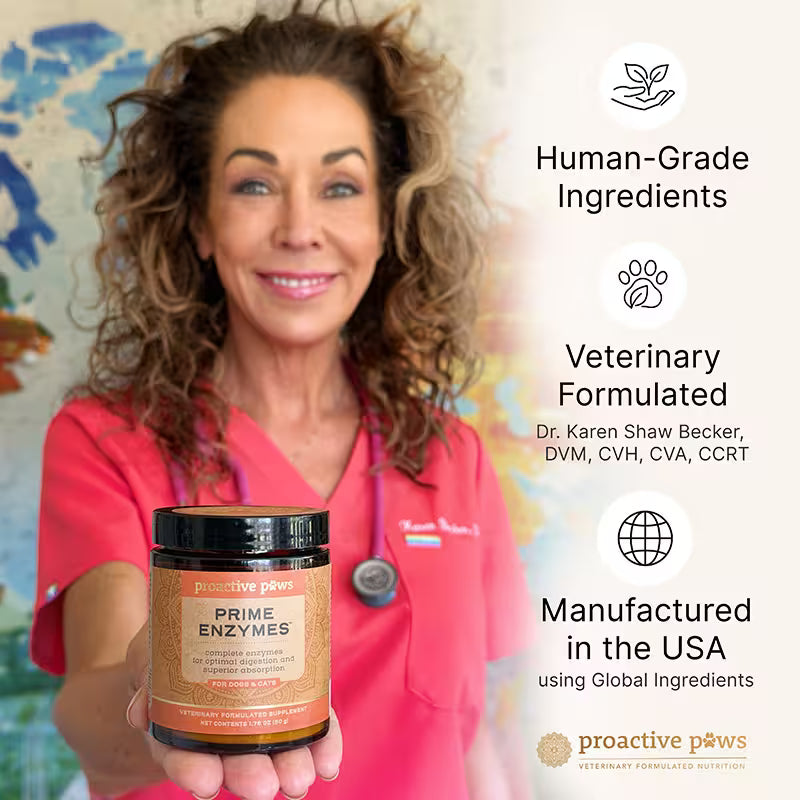
Formulated by Dr. Karen Becker to support digestion, delivering a full‑spectrum enzyme blend for improved nutrient absorption and overall health.
Couldn't load pickup availability
Product Information
Product Information
- Healthy digestion supports everyday wellness—properly breaking down food helps make nutrients available to the body while supporting normal digestive function and overall well-being.
- Everyday digestive needs can vary, making comprehensive nutritional support a helpful part of maintaining normal digestion across a variety of diets and lifestyles.
- PRIME ENZYMES supports healthy digestive function, providing a broad spectrum of enzymes that help digest proteins, fats, carbohydrates, fibers, and sugars as part of normal digestion.
- Different diets can have different digestive needs, and a broad-spectrum enzyme formula provides complementary support for the normal digestion of a variety of nutrients.
- PRIME ENZYMES provides versatile digestive support, with enzymes selected to complement a variety of feeding approaches and support normal digestive processes.
- Comprehensive enzyme and digestive support helps support normal digestive processes, including the digestion of fats and the availability of nutrients from food.
Directions of Use
Directions of Use
Product Ingredients
Product Ingredients
Discover More About Prime Enzymes™ for Dogs & Cats
- Fresh until February 2029


How Digestion Works—and What Happens When It Doesn’t
Digestion is a finely tuned sequence. It begins in the stomach, where strong acid and enzymes break down proteins and signal the intestines to prepare. In the small intestine, bile and pancreatic enzymes complete the job so nutrients can be absorbed effectively.
When any part of this process falters, digestion stalls. Food lingers too long, breaks down incompletely, and ferments—feeding harmful microbes and triggering bloating, gas, reflux, and inflammation. These symptoms aren’t random; they’re signs that digestion is not functioning as designed.
Why Modern Diets Create Digestive Stress
Why Modern Diets Create Digestive Stress

Ultra‑processed and cooked diets disrupt digestion in several ways. High‑heat processing destroys natural enzymes, refined starches dilute the protein content pets are biologically designed to digest, and dry foods weaken stomach acid production over time. Low stomach acid leaves proteins only partially digested, slows stomach emptying, and reduces the signals needed for healthy bile and pancreatic enzyme release—often causing reflux‑like symptoms that are mistakenly blamed on excess acid.
Even fresh and raw-fed pets may need additional digestive support. Naturally occurring enzymes in meat and plants may not provide the same range of enzymes carnivores would traditionally obtain from consuming whole prey, including enzyme-rich organs such as the pancreas. Supplemental lipase can help support the breakdown and digestion of dietary fats, promoting more efficient nutrient utilization and digestive balance.
How Digestive Enzymes Restore Balance
Digestive enzymes help correct these gaps at the very first step of digestion. Proteases, lipase, amylase, and fiber‑breaking enzymes support the full breakdown of proteins, fats, carbohydrates, and plant fibers—reducing fermentation, easing digestive stress, and improving nutrient absorption. Added support such as ox bile and taurine promotes smooth bile flow, healthy fat digestion, and gallbladder resilience.
By aiding digestion before food reaches the small intestine, enzymes help prevent bacterial overgrowth, relieve reflux, reduce gas and bloating, and decrease the demand placed on organs like the pancreas and gallbladder. This is not a shortcut—it’s foundational support for pets experiencing modern digestive challenges. Proper enzymatic support helps restore comfort, balance, and overall digestive health so pets can fully benefit from the food they eat.
Frequently ask questions
Can I give Prime Digestive Enzymes with probiotics?
Are there any conditions where I should not use digestive enzymes?
I have a very sensitive pet. How should I introduce this product?
Can Prime Enzymes be used daily?
Is this helpful for pets eating fresh or raw diets?
Can this help pets with gas, bloating, or reflux?
Will this change my pet’s stool?
How quickly will I see results?
How many milligrams of taurine are included in the product?
Why Are Some Glass Jars Only Half Full?
Choose Frequency:
Choose Quantity:


