


Liver Lift™ - Daily Detox
- Fresh until February 2029


The Modern Detox Reality for Dogs and Cats
Today’s companion animals are living in a biological landscape their bodies were never designed to navigate. Every day, dogs and cats absorb a steady stream of chemicals from air, water, soil, flooring, bedding, lawn treatments, household cleaners, flea and tick pesticides, pharmaceutical residues, microplastics, PFAS compounds, heavy metals, and ultra-processed diets that generate their own metabolic waste.

These exposures are not rare, seasonal, or accidental: they are constant, cumulative, and quietly stored in the liver, kidneys, lymphatics, bloodstream, brain, and fat tissue over time. In a world where toxins arrive through multiple doors, detoxification must exit through multiple pathways.
Detoxification in the body is not the job of a single “master organ,” but a coordinated system of biological pathways that share the workload every minute of every day. The liver chemically transforms toxins, drugs, pesticides, mycotoxins, plasticizers, PFAS, flame-retardants, and metabolic byproducts into forms that can be excreted. The kidneys then filter water-soluble compounds, xenobiotic metabolites, and protein breakdown products from the bloodstream and move them into urine for elimination. The lymphatic system clears cellular debris, inflammatory cytokines, and environmental particulates from tissues and returns them to the circulatory system for processing.
Meanwhile, blood serves as the transport medium that carries both nutrients and contaminants, shuttling them to organs of filtration and excretion. None of these systems can function in isolation, and none is more important than the others, they are interdependent cogs of one continuous clearance mechanism. When one system slows, all systems feel the burden.
In a modern environment where pets encounter hundreds of different chemical categories including veterinary parasiticide neurotoxins, lawn herbicides, PFAS-contaminated water, airborne fragrances and VOCs, plasticizers in beds and bowls, heavy metals , and mycotoxins in kibble, and advanced glycation end-products (AGE’s) in all types of ultra-processed diets, detoxification cannot rely on a single pathway.
Some toxins require bile conjugation and hepatocyte processing, others need renal filtration, others are cleared through lymphatic trafficking, and many must be bound in the gastrointestinal tract to prevent reabsorption. This means that a one-dimensional detox strategy will inevitably leave gaps, allowing recirculation, tissue accumulation, or neurologic stress to persist.
A true, modern detox protocol must mirror the body’s own multi-system model: supporting the liver’s conjugation and bile flow, assisting the kidneys’ filtration, strengthening lymphatic drainage, stabilizing the nervous system, and binding toxins in the gut before they return to circulation.
Because our pets face categories of toxins that behave differently: lipophilic pesticides, water-soluble drug residues, inhaled VOCs, endocrine-disrupting plastics, oxidative food byproducts, and neuro-excitatory parasiticides, only a multimodal approach can match the diversity of the burden.
Detoxification is not a single action but an ongoing orchestration. When we support all clearance pathways simultaneously, we honor the way the body is designed to protect itself, and we give pets the biological tools to live in an environment their physiology was never originally built to navigate.

According to the Environmental Working Group’s Polluted Pets study, dogs and cats were found to carry 48 out of 70 tested industrial chemicals, many at significantly higher concentrations than those measured in humans. Some pets showed over 23-fold greater flame-retardant burdens and substantially elevated mercury when compared to human biomonitoring.
These findings are not surprising when you consider that pets spend more time in direct contact with synthetic bedding, treated flooring, and flame-retardant upholstery than any other member of the household. A passive silicone collar-tag exposure analysis further confirmed that dogs continuously encounter brominated flame retardants, organophosphate esters, phthalates, pesticides, and PAHs simply by existing indoors, without any dramatic point-source exposure event.
This means that modern toxicity is not episodic, it is ambient. Pets are not occasionally exposed; they are continually absorbing small quantities from their air, water, food, bedding, soil, lawns, cleaning agents, and veterinary pharmacologic treatments. When detox pathways cannot keep pace with this incoming chemistry, toxins are not expelled, they are stored. PFAS lodge in membranous tissue, flame retardants accumulate in neural and endocrine lipid compartments, pesticide residues cycle through bile, metals embed in bone or liver, and AGEs alter vessel integrity and kidney aging over time. Storage is not neutral; it is simply postponed detox.
Why Detox Support Must Be Multimodal
Detoxification is often mistakenly described as a liver-only function, when in fact it is carried out by a network of systems working simultaneously. The liver conjugates and packages toxins for removal, but cannot eliminate them without bile flow, kidney filtration, lymphatic transport, gastrointestinal binding, microbial barrier stewardship, and central nervous system inhibitory calm.

The kidneys filter water-soluble metabolites. The lymphatics shuttle chemical debris and immune byproducts out of tissues. The gut must bind and escort bile-excreted compounds or they reabsorb and cycle back. The microbiome maintains intestinal barrier integrity, so toxins do not leak back into circulation. The central nervous system (CNS), meanwhile, requires GABA-mediated inhibitory tone to prevent neurotoxic backlog and allow glial cleanup of excitatory pesticide residues.
When one system slows, all others feel the burden. Thickened bile means toxins from PFAS, flame retardants, and lipophilic pesticides recirculate rather than leave the body. Reduced glutathione means pesticides, drugs, hydrocarbons, and VOCs generate oxidative stress inside hepatocytes (cells that make up 80% of the liver) rather than being neutralized. If GABA signaling is suppressed, as shown in pets experiencingflea and tick pesticide reactions, neurons lose inhibitory control, excitatory load rises, and neuro-detox stalls. Detox has never been a single door; it is a hallway of interconnected exits, andtoday’s pets require gentle support across all of them, continuously, not seasonally.
A Gentle, Ongoing Approach to Modern Detox

Detoxification is not about perfection, or even complete avoidance. Nothing can eliminate PFAS from rain, microplastics from flooring dust, or fire-retardant particles from indoor upholstery. We reduce exposures when and where we can; safer lawn choices, cleaner water, fragrance-free ‘green’ cleaners; but avoidance cannot entirely outrun the chemistry of contemporary life.
Detox isn’t a cleanse, a purge, or a rapid chemical dump. It is a daily practice of clearing what the world quietly places in your pet’s bloodstream, tissues, and liver cells. It is ongoing support, not a dramatic one-time reduction. It’s maintaining bile flow rather than waiting for stagnation. It’s binding metals and pesticides before they recycle. It is restoring glutathione rather than letting oxidative damage accumulate. It’s protecting neurons, so detox does not stall behind excitatory spikes.
Detox, when done gently and continuously, does not require their body to fight harder, but supports it so it’s not fighting alone. This is how we care wisely and calmly in a world that is chemically louder than biology ever expected.
Since we cannot erase every toxin our pets are exposed to, we must support the body as best we can to counteract them. This is why I created Liver Lift™ the first daily multimodal detox designed specifically as ongoing support for dogs and cats.
Introducing Liver Lift™The First Daily, Multi-Pathway Detox Support for Dogs & Cats

Rather than treating detox as a liver-only event, Liver Lift™ supports the entire system how nature intended: hepatic conjugation and bile flow, kidney filtration, blood-borne transport and clearance, lymphatic drainage, cellular antioxidant regeneration, neurotransmitter regeneration , and gastrointestinal toxin binding to prevent reabsorption. Because no single pathway can keep up with today’s toxic inputs, true detox support must mirror the body’s design: multi-organ, multi-route, and continuous.
Liver Lift™ - Liver, kidney, lymphatic, gut-barrier, and central nervous support for everyday toxic exposures.
This formula is designed for daily biological maintenance; quietly, consistently, gently, and comprehensively. It helps the liver offload what it cannot store, helps the kidneys filter what they cannot ignore, helps the lymphatics move what they cannot hold, and helps the central nervous system quiet enough to repair itself rather than react. It binds what must leave, restores what must regenerate, and stays active where cumulative burden likes to hide.
How Ingredients Work Together to Unload What Accumulates

Effective detox today means supporting the liver’s ability to assist kidney filtration, bile movement, microbial binding, elimination processes, neurological inhibition and glutathione regeneration, all at once.
If there's one molecule every dog should have adequate levels of, it would be glutathione. Often called the "master antioxidant," glutathione is much more than that, it's your dog's primary cellular detoxification system. When the liver encounters a toxin, glutathione binds to it, neutralizes it, and helps shuttle it out of the body.
In phase II liver detox, glutathione attaches to toxins, heavy metals, pesticides, drugs, and carcinogens, making them water-soluble for excretion in urine or bile. The problem? Glutathione gets depleted. Stress depletes it. Age depletes it. Medications deplete it. Toxic exposures deplete it. And when glutathione runs low, your dog's ability to handle everyday toxic exposures becomes compromised.
This is where the research on N-Acetylcysteine (NAC) becomes fascinating. NAC isn't just a supplement in human medicine, it's an FDA-approved pharmaceutical. When a human enters an emergency room with acetaminophen poisoning, NAC is the antidote that saves their liver and their life. Why? Because NAC is a direct precursor to glutathione, and it can restore hepatic glutathione levels even when the liver is under severe toxic stress.
NAC restores cysteine pools depleted by daily exposure to airborne particulates, pesticides, and flame retardants and allows the liver to rebuild glutathione, its essential detox cofactor. NAC is a precursor to cysteine, the sulfur-containing amino acid required to synthesize glutathione, the primary intracellular antioxidant and detoxification cofactor in hepatocytes, renal tubular cells, and many immune cells.
In phase II detoxification, glutathione conjugates electrophilic xenobiotics such as reactive drug metabolites, pesticide breakdown products, and lipid peroxidation aldehydes, rendering them more water-soluble for biliary or urinary excretion. NAC replenishes hepatic cysteine pools and restores glutathione after depletion from chronic exposure to environmental pollutants, inhaled VOCs, mycotoxins from food, and metal-based oxidative stress.
It also directly acts as a nucleophile, scavenging reactive oxygen and nitrogen species, and can modulate redox-sensitive transcription factors that regulate inflammatory and detoxification genes. In short, NAC helps reestablish the biochemical capacity for conjugation and safe clearance when the liver has been overwhelmed by modern toxic load. NAC helps reestablish the biochemical capacity for conjugation and safe clearance when the liver has been overwhelmed by modern toxic loads.
L-glutathione
Endogenous glutathione production can be impaired in animals subjected to chronic oxidative and toxic stress (drugs, pesticides, heavy metals, chronic inflammation). L-glutathione delivers preformed reduced glutathione in a phospholipid encapsulation designed to protect it from degradation in the GI tract and enhance absorption. Once taken up by cells, glutathione participates directly in phase II conjugation, reduces oxidized proteins and lipids, and maintains the redox state of critical enzymes involved in xenobiotic metabolism.
In the presence of inhaled VOCs, PFAS, and lipid-soluble xenobiotics, glutathione is repeatedly oxidized; exogenous L-glutathione allows tissue pools to recover more quickly than relying solely on de novo synthesis from amino acids. It also supports mitochondrial detoxification processes, as mitochondrial glutathione is essential for neutralizing reactive oxygen species generated during oxidative phosphorylation in toxin-stressed cells.
Glycine is an amino acid that the body uses to create protein. It is derived from the Greek word, “glyks” which means sweet. Glycine itself participates in conjugation reactions (glycine conjugation) in hepatic mitochondria, helping neutralize certain organic acids and intermediates. In addition, glycine has membrane-stabilizing and anti-inflammatory properties, modulates NMDA receptors in the nervous system, and can attenuate cytokine-driven oxidative damage, which indirectly preserves detox organ function. Glutathione synthesis requires three amino acids: glutamate, cysteine, and glycine. In many mammals, glycine is rate-limiting for glutathione production under chronic toxic stress.
When animals are exposed to a combination of pesticides, PFAS, AGE’s from ultra-processed foods, and air- and waterborne xenobiotics, glutathione turnover accelerates and glycine stores are rapidly consumed. Supplementing glycine removes this bottleneck, allowing steady synthesis of glutathione so phase II detoxification can proceed. L-glutathione is delivered directly, bypassing synthesis demands and restoring redox balance in the face of PFAS, pesticide aldehydes, and solvent metabolites.
Carnosine plays a different role. Studies show that dogs eating commercially processed pet foods may ingest more than 122 times the amount of AGEs per body-weight basis compared with the average human diet, exposing our pets to a biochemical burden that can accelerate inflammation, oxidative stress, and age-related disease. Remember that AGEs are harmful molecular compounds formed during high-heat pet food manufacturing. They accumulate in the body when animals eat ultra-processed diets, and once absorbed, they trigger chronic oxidative stress, stiffen collagen and connective tissues, damage vascular structures, accelerate kidney and liver aging, and drive systemic inflammation.
Unlike many toxins that are rapidly cleared, AGEs integrate into tissues and stay there, altering normal protein architecture and cellular signaling over time. Carnosine acts as a dietary AGE interceptor: in the gut it binds reactive carbonyl compounds (the chemical precursors of AGEs) before they can cross into circulation, reducing total AGE absorption and lowering the inflammatory burden that ultra-processed foods otherwise impose on the body.
Broccoli Sprouts (sulforaphane). Sulforaphane helps turn on the body’s own built-in detox machinery by activating the Nrf2 pathway, which boosts production of powerful phase II detoxification that convert fat-soluble pollutants into water-soluble forms for excretion, allowing the body to more efficiently eliminate toxins, heavy metals, pesticide residues, and other environmental chemicals.
At the same time, sulforaphane ramps up antioxidant defenses and reduces oxidative stress and inflammation, protecting organs (liver, kidneys, brain) from damage caused by chronic exposure to air pollutants, water contaminants, flame-retardants, and other xenobiotics. For pets exposed daily to modern toxins via food, water, air, and household products, sulforaphane acts as a metabolic “reset,” helping clear what accumulates and lowering long-term chemical burden.
Sulforaphane activates Phase II detoxification genes, enabling the conversion of stored flame-retardants, combustion hydrocarbons, and plasticizers into water-soluble forms ready for elimination, while also lowering inflammatory stress on detox organs.
Milk thistle (silymarin, the active compound in milk thistle) has been used for centuries for liver support, Multiple randomized controlled trials and systematic reviews have examined silymarin for hepatoprotective effects in humans with liver disease and toxin-related liver injury. In veterinary medicine, milk thistle is one of the few liver support supplements with at least some literature suggesting potential benefits in dogs.
The silymarin compounds support the liver’s detox workload by strengthening the very cells responsible for breaking down and eliminating chemicals. Nearly all veterinary drugs, including NSAIDs, steroids, antibiotics, monthly heartworm preventives, and flea and tick pesticides, undergo hepatic metabolism, meaning the liver must chemically transform them into forms that can be safely excreted. Silymarin protects hepatocytes during this process by reducing oxidative stress generated as medications and toxins are metabolized, stabilizing cell membranes so breakdown intermediates don’t damage them, and helping restore intracellular glutathione, the liver’s primary detoxification molecule.
It also encourages normal bile production, which is essential for removing fat-soluble toxins, pesticide residues, and drug metabolites via the digestive tract. By supporting antioxidant defenses and regenerative signaling inside the liver, milk thistle helps maintain detox efficiency in pets continually exposed to pharmaceuticals, environmental chemicals, lawn treatments, processed food additives, and indoor contaminants.
TUDCA (taurourodeoxycholic acid) is a naturally occurring bile acid that helps restore proper bile flow and protects liver cells as they detoxify fat-soluble chemicals, pesticides, PFAS, and other environmental toxins. Because many toxins (and drug metabolites) are eliminated via bile, smooth bile flow is critical, sluggish or inadequate bile production is very common in pets, and causes toxins to linger in the liver. TUDCA stimulates bile excretion even under stress conditions, helping move conjugated toxins from the liver into the gut for elimination. This is especially important for pets that have had their gallbladders removed or suffer from ongoing GI problems.
Beyond promoting detoxification via bile excretion, TUDCA offers cell-protective effects: it stabilizes mitochondrial membranes, reduces oxidative stress and endoplasmic-reticulum (ER) stress, and blocks apoptosis (cell death) in hepatocytes. In doing so, it helps maintain healthy liver cell function even when the chemical burden is high.
Preclinical studies have shown that TUDCA helps prevent neurodegeneration and reduces insulin sensitivity from chronic toxin exposure or metabolic stressxvi. For pets living in today’s chemically complex environment, exposed to household chemicals and pesticides, TUDCA can be a key support to keep detox pathways moving, protect liver cells from overload, and promote safe removal of fat-soluble toxins rather than allowing them to accumulate and recirculate.
Superoxide dismutase (SOD) is a key antioxidant enzyme that neutralizes highly reactive superoxide radicals, preventing oxidative damage while supporting the liver’s detoxification systems. By converting superoxide into hydrogen peroxide that is further cleared by catalase and glutathione peroxidase, SOD preserves glutathione levels, reduces inflammatory stress, and activates Nrf2 signaling, which upregulates the body’s primary detox enzymes. Together, these actions protect liver cells and enhance phase I and phase II toxin clearance, helping the body process environmental and metabolic toxins more efficiently.
Humic and Fulvic acids are naturally occurring compounds found in soil and ancient plant deposits, essentially the “building blocks” of soil humus. Research reviews demonstrate their remarkable adsorptive capacity; they can bind to toxins, heavy metals, and even certain harmful bacteria in the GI tract. The fulvic acid research is particularly interesting because it shows strong metal chelation properties in environmental and animal models.
When given to pets, these humic substances act like molecular sponges and gentle detox escorts: they chelate heavy metals and other charged toxic ions, bind persistent organic pollutants, and sequester fat-soluble or bile-excreted toxins in the gut, reducing reabsorption and easing the burden on the liver, kidneys, and lymphatic system.
At the same time, humic and fulvic acids help support a healthier, more balanced gut microbiome. Studies show that oral supplementation can increase overall microbial biomass without disturbing diversity, improve intestinal barrier integrity, reduce gut inflammation, and support beneficial microbial populations, helping prevent toxins or inflammatory molecules from leaking back into circulation. Humic and fulvic acids give pets a two-fold protective edge: they both reduce toxic load by binding and removing harmful compounds before they can accumulate and strengthen the gut ecosystem that forms the first line of defense for the body’s detox and immune systems.
Chlorella is a microscopic green algae with a naturally sturdy cell wall that binds heavy metals before they can be absorbed into your pet’s bloodstream. This matters because metals like mercury, arsenic, cadmium, and lead don’t come only from industrial spills, they show up in fish-based pet foods, aging plumbing and tap water, lawn and city runoff, household dust, and even canned food linings. Chlorella’s cell wall acts like a selective filter: it attaches to these metals in the gut, forms stable complexes, and helps move them out of the body through normal elimination rather than allowing them to circulate, lodge in organs, or be re-absorbed through bile.
Studies in animals show that chlorella can lower tissue metal levels and soften the oxidative stress heavy metals place on detox organs such as the liver and kidneys. Pets live with unavoidable daily exposures via water bowls, soil, fish-based diets, urban dust; chlorella serves as a steady, natural chelating companion that reduces metal buildup over time and supports safer lifelong detoxification without stressing the body. It provides stable metal sequestration for mercury, cadmium, arsenic, and lead present in fish-based diets, water, and dust.
GABA (gamma-aminobutyric acid) GABA is the body’s main natural “brake signal” in the brain, the chief inhibitory neurotransmitter that tells neurons when to slow down, stay calm, and stop over-firing. When your pet receives isoxazoline flea or tick medications, those compounds work in insects by disabling their GABA-gated chloride channels and simultaneously over-stimulating excitatory pathways, leading to fatal nervous-system overstimulation of the parasitexxiii. In some dogs and cats, that same mechanism may partially affect their own GABA receptors, weakening the inhibitory system and leaving excitatory signals running unchecked and raising risk of tremors, hyperactivity, or even seizures.
Supplemental GABA helps restore balance. By increasing available inhibitory neurotransmitter in the brain when GABA-mediated inhibition is compromised, GABA helps re-establish the nervous system’s natural “off switch,” reducing excitotoxic stress and dampening excessive neuronal firing. This protective effect supports nerve stability and lowers the chance of neurologic reactions during the time the drug is active.
GABA supports long-term central-nervous-system health and detoxification; when neurons are overstimulated by chemical exposures (insecticides and other environmental pollutants), they create oxidative byproducts, inflammatory signals, and metabolic waste. GABA’s inhibitory tone gives the brain breathing room so its cleanup cells (glia, astrocytes, microglia) can work efficiently to clear those byproducts rather than allowing them to accumulate.
In plain terms: for pets receiving potent neuro-active flea/tick preventives, or have yard, city or municipal pesticide exposure, supplemental GABA acts as a protective buffer, calming excess brain activity, protecting neurons, and helping the brain clear out chemical and metabolic debris, supporting healthier neurologic function amid unavoidable environmental exposure.It helps restore inhibitory nervous system control when neuro-active insecticideslike isoxazoline (including NexGard, Bravecto, Simparica and Credelio) partially cross into mammalian GABA receptor pathways, reducing inhibitory braking and enabling excitatory overload. When the brain is overstimulated, detox is not prioritized; survival firing is. By restoring calm tone, GABA allows neural waste and pesticide metabolites to be cleared rather than accumulate and can decrease the likelihood of adverse events, including drug-induced seizures.
Together, these ingredients do not force detoxification; they make detoxification possible.
Why Detox Must Be Multimodal
The liver is not your pet’s only detox organ. It is just the most famous. Detoxification is a team sport requiring:
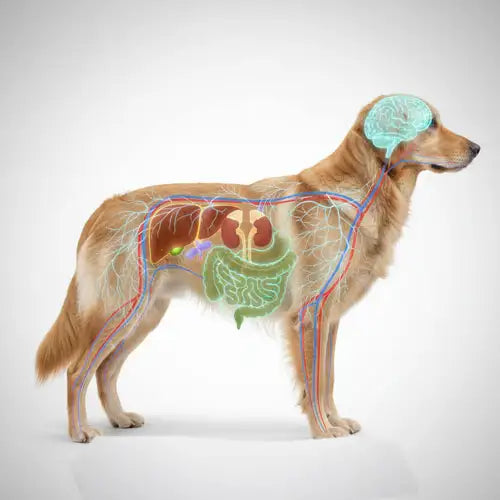
- Hepatic conjugation (liver)
- Renal filtration (kidneys)
- Cellular debris transport (lymph)
- Binding and removal (GI tract)
- Brain glial cleanup and inhibition control (CNS)
- Blood transport to move contaminants to exits
When one pathway slows, the whole system clogs. When bile stalls, toxins are reabsorbed. When kidneys strain, oxidative debris accumulates. When GABA signaling is suppressed, CNS detox halts.
This is why a single ingredient “liver cleanse” can no longer meet modern toxic load. A modern pet needs a modern detox formula;multi-system, multi-toxin, daily, gentle, protective.
When the Body Cannot Clear, It Stores
- PFAS lodge in membranes
- phthalates embed in endocrine tissue
- flame retardants build in adipose
- metals sequester in bone and myelin
- AGEs cross-link in kidneys and vessels
Multiple toxin types require multiple exit routes:
- PFAS → bile
- flame retardants → lymph + liver
- metals → GI binding + bile + kidney
- neurotoxins → CNS glial detox + inhibitory tone
- AGEs → carbonyl interception + vascular clearance
- VOCs → glutathione conjugation + kidney filtration
Ingredient Profile Highlights
Full-System Celebration of Purpose
N-Acetylcysteine (NAC)
The Rebuilder
- Supports: liver, lungs, antioxidant network
- Specializes In: VOCs, wildfire particulates, mycotoxins, flame-retardant aldehydes, pesticide residues
- Why it matters: modern pets breathe chemically treated air
NAC restores glutathione capacity after environmental strain. When pets inhale cleaning aerosol, wildfire smoke, PFAS-laden dust, or urban air, glutathione collapses. NAC rebuilds the sulfur backbone required to neutralize these inhaled pollutants at the cellular stage.
Glycine
The Quiet Engine of Detox
- Supports: liver conjugation, bile acid clearance, collagen stability
- Specializes In: PFAS aldehydes, pesticide intermediates, mitochondrial organic acids
- Why it matters: glycine becomes rate-limiting when toxin load is chronic
Processed diets and chronic chemical exposure burn through glycine faster than the body can replace it, slowing glutathione assembly. Glycine provides the missing third amino acid detox requires.
L-glutathione
The Master Antioxidant, Delivered
- Supports: liver, kidneys, mitochondria
- Specializes In: PFAS, heavy metals, oxidized pesticide metabolites, aldehydes
- Why it matters: pets can’t keep up with GSH loss from constant airborne and dietary insult
Carnosine
The AGE Breaker
- Supports: kidneys, vasculature, collagen, metabolic stress
- Specializes In: carbonyl toxins, glycation end-products
- Why it matters: pets eating heat-processed diets and treats ingest 122× higher AGEs than humans
Carnosine binds AGE carbonyls before they enter the bloodstream, preventing collagen stiffening, kidney aging, and vascular injury from diet-borne glycotoxins.
Sulforaphane (Broccoli Sprouts)
The Detox Switch Activation
- Supports: liver genes, phase II clearance enzymes, kidney oxidation defense
- Specializes In: hydrocarbon residues, flame retardants, PAHs, diesel particulates
- Why it matters: it turns ON the genes that detoxify modern pollutants
Sulforaphane activates Nrf2 pathways that tell detox organs to upregulate defense enzymes. It is metabolic re-calibration for a high-pollutant world.
Milk Thistle (Silymarin)
The Liver Cell Shield
- Supports: bile production, hepatocyte membrane integrity
- Specializes In: NSAID breakdown, steroid residuals, parasiticide metabolites
- Why it matters: nearly all veterinary medications are liver-processed
Silymarin stabilizes hepatocyte membranes during pesticide and pharmaceutical metabolism, reducing oxidative injury and restoring intracellular glutathione.
TUDCA
The Bile-Flow Corrector
- Supports: biliary drainage, mitochondrial safety, hepatocyte survival
- Specializes In: PFAS, lipophilic pesticides, flame retardants
- Why it matters: without bile flow, toxins cycle endlessly
TUDCA thins bile, prevents gallbladder stagnation, and allows bile-exported toxins to leave instead of being re-absorbed across the gut wall.
Humic & Fulvic Acids
The Binder + Barrier
- Supports: gut wall, lymphatic debris, microbial stability
- Specializes In: heavy metals, PFAS fragments, fungicides, phthalates
- Why it matters: they prevent re-entry
These compounds bind charged and fat-soluble toxins in the gut, preventing enterohepatic recirculation, and support microbiome strength which forms the first detox gate.
Chlorella
The Metal Catcher
- Supports: liver bile recirculation, kidney metal burden
- Specializes In: mercury, cadmium, arsenic, lead
- Why it matters: metals accumulate in brain, bone, and adrenal lipid tissue
Chlorella’s thick cell wall forms stable complexes with metals so they cannot be reabsorbed through bile.
GABA
The CNS Detox Gatekeeper
- Supports: inhibitory tone, seizure threshold, CNS waste clearance
- Specializes In: excitatory pesticide triggers, isoxazoline neuro-stress
- Why it matters: detox cannot occur when the brain is overstimulated
Chemical flea and tick medications block GABA receptors in insects. In some dogs and cats, receptor crossover suppresses inhibitory tone, increasing the likelihood of unwanted neurologic side effects. GABA restores braking power, allowing glial cells to clear neuro-waste rather than drown in excitation.
Gentle Enough for Daily Use

Strong Enough for Modern Chemistry
- no diarrhea
- no purging/nausea
- no liver shock
- no kidney strain
- no fasting required
Liver Lift™ was created to work quietly in the background of your pet’s life, supporting the pathways that modern living strains the most. It is not about pushing the body harder, but about helping it do what it already knows how to do. In a world we cannot fully control, daily multimodal detox support becomes an act of protection, preservation, and respect for the remarkable physiology our dogs and cats rely on every day.


