



Story Highlights
- A new study published in the International Journal of Biometeorology found that even a 12-minute walk can place significant heat stress on dogs in sunny conditions.
- Pavement temperature, not air temperature, is the biggest predictor of heat exposure during walks.
- A dog's fur acts as a natural heat shield, protecting the skin from direct solar radiation and supporting the body's ability to regulate temperature.
- Dogs can lose surprising amounts of water through panting, even on short walks, making dehydration a major concern.
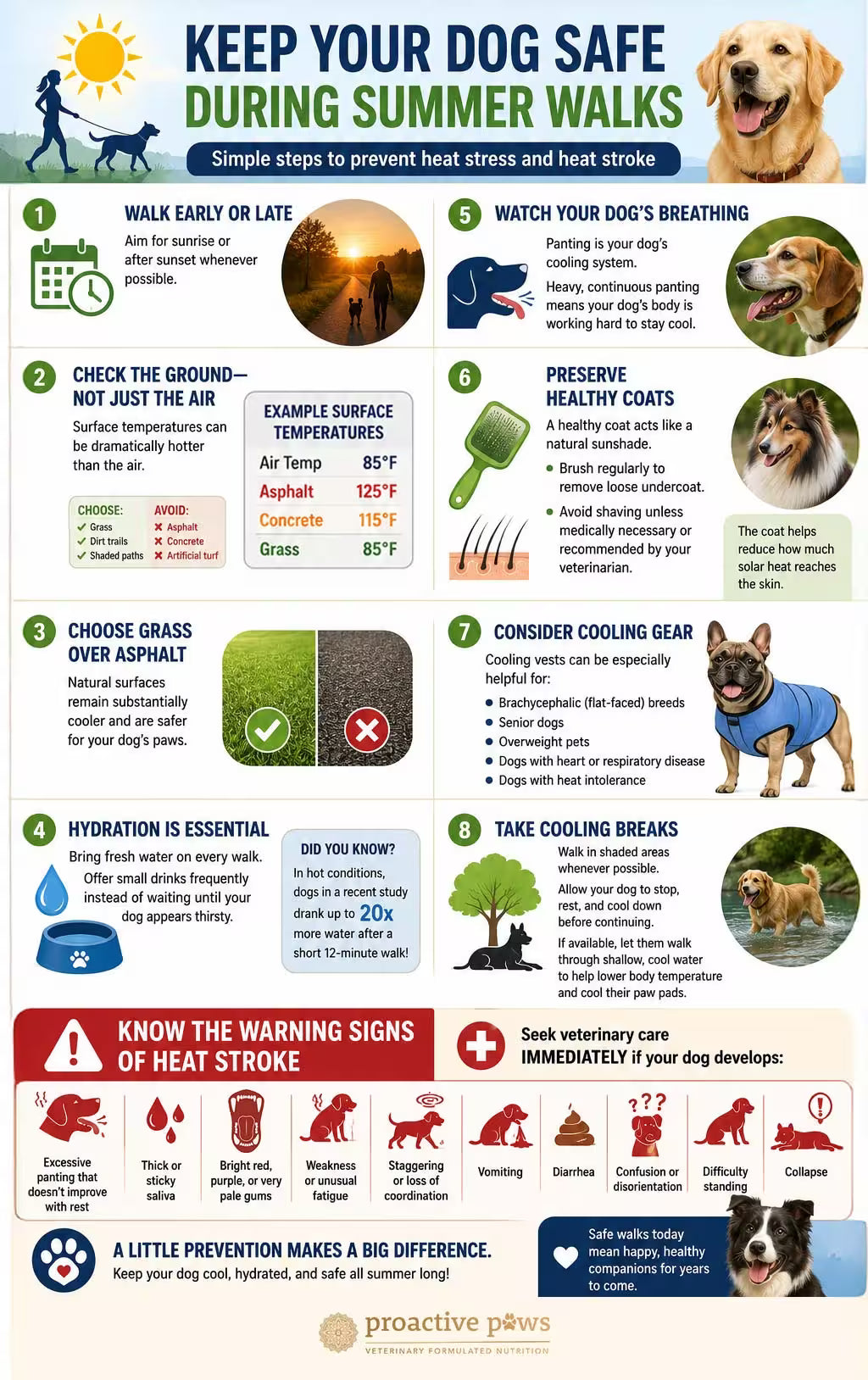
- Simple changes like walking at dawn, checking pavement temperatures, offering water frequently, and preserving your dog's natural coat can dramatically reduce the risk of heat-related illness.
For many pet parents, summer means longer days, outdoor adventures, and extra walks with their dogs. But when temperatures climb, even well-intentioned exercise can become dangerous much faster than most people realize.
An important new study published in the International Journal of Biometeorology1 sheds light on something veterinarians have been observing for years: dogs begin experiencing measurable heat stress long before they show obvious signs of overheating.
The study challenges one of the longest-running debates in the pet world, whether shaving a dog's coat actually helps keep them cool. The findings provide valuable guidance for every pet parent, whether you live in Arizona, Florida, Texas, Nova Scotia, or anywhere in between.
Heat doesn't discriminate, no matter where you and your pet reside.
Heat Stress Starts Before Heat Stroke Happens
A common misconception I hear most every summer is: "My dog is only outside for ten or fifteen minutes". Unfortunately, this study suggests that could be all it takes for your pup. Sometimes, even less.
Researchers evaluated dogs walking outdoors for just 12 minutes under varying environmental conditions. Although the walks were relatively short, the dogs' bodies had to work significantly harder to maintain safe internal temperatures whenever solar radiation and ground temperatures increased.
Heat stress begins well before a dog develops heat stroke. By the time many owners recognize a problem, the body's cooling mechanisms have already been working overtime.
The Temperature of the Pavement Matters More Than the Air
Most of us glance at the weather app before heading outside. "It's only 82 degrees." "Today is just 88." But the researchers discovered that air temperature was not the best indicator of heat exposure. Instead, the strongest relationship was between paw pad temperature and ground temperature.

Dark asphalt, concrete, artificial turf, and even some sidewalks absorb enormous amounts of solar radiation, often becoming dramatically hotter than the surrounding air. A pleasant-looking day can easily produce pavement temperatures that can burn paw pads while also increasing your dog's overall heat load.
This is why I encourage pet parents to consider the entire environment your dog experiences, not just what the thermometer reads. Important things to think about:
- Pavement temperature
- Direct sunlight
- Humidity
- Wind
- Shade availability
- Exercise intensity
All of these things affect how difficult it becomes for your dog's body to stay cool.
Your Dog's Built-In Cooling System
Many people believe that shaving a dog automatically makes them cooler in summer. This research suggests the opposite may often be true. Scientists found that the hair coat absorbed tremendous amounts of solar radiation before it ever reached the skin.
During the hottest conditions:
- Hair coat temperatures increased by approximately 20°C (36°F).
- Skin temperature underneath increased only about 7°C (13°F).
That's an enormous difference. Rather than trapping heat against the body, the coat functioned much like a reflective shade cloth or thermal barrier. It absorbed and slowed incoming solar energy before it reached deeper tissues.
Think about standing under a patio umbrella. The umbrella becomes hot, but you stay considerably cooler. Your dog's coat appears to perform a similar protective function. I’m not saying that dogs should never be clipped. Severely matted coats, neglected grooming, certain medical conditions, and some coat types require professional management. But shaving healthy double-coated breeds to "keep them cool" removes one of nature's most effective cooling systems.
Panting Doesn't Mean Your Dog Is Fine
You might think that if your dog is walking normally and doesn't appear distressed, everything is okay. That’s often not the case, however. Dogs maintained relatively normal core body temperatures throughout much of this study. Yet physiologically, their bodies were working much harder.
Their respiratory rates increased dramatically as panting became the primary cooling mechanism. Panting is remarkably effective. But it's also expensive. Not financially. Biologically. Every breath carries away moisture. The faster a dog pants, the faster water leaves their body.
Short Walks Can Cause Significant Dehydration
Dogs can lose a lot of water while trying to regulate their body temperature. The signs of dehydration are quite subtle, so it’s not obvious to pet parents that their dog can quickly become critically ill.
Following cooler walks, dogs drank as little as 10 milliliters of water. After the hotter walks? Some dogs consumed over 215 milliliters, more than twenty times as much. That dramatic increase is worth remembering.
I recommend carrying water on every warm-weather walk, even if you're only planning to be outside briefly. You never know when you might strike up a conversation with your neighbor and be out an extra 10-15 minutes. Your pet needs shade and relief from that sizzling sidewalk.
Heat Stress Happens Everywhere
Dogs living in Arizona certainly experience heat differently than dogs living in Nova Scotia. But every dog's body must regulate temperature using the same biological systems. Whether temperatures suddenly spike during a Midwestern heat wave or humidity climbs along the East Coast, dogs can experience dangerous heat loads regardless of where they live.
Acclimation helps. It does not eliminate risk.
Brachycephalic Dogs Face Even Greater Challenges
Flat-faced breeds, including Bulldogs, French Bulldogs, Pugs, Boston Terriers, Shih Tzus, Persian cats, and others, already struggle to move air efficiently. Their shortened airways make panting less effective.
Because panting is their primary cooling mechanism, these breeds become overheated much more quickly. For these dogs, even modest increases in environmental heat deserve extra caution.
Cooling vests, early morning walks, shade, and limiting exercise become even more important.
Protect Those Paw Pads
Dogs don't only lose heat through panting. Their paw pads also help regulate body temperature.
Walking through shallow cool water after exercise can help lower surface temperatures while simultaneously rinsing away environmental contaminants like pesticides and herbicides.
If your dog wears boots, shorten walks and monitor carefully for signs of overheating. Boots can protect against hot pavement and chemical exposure; they also reduce one avenue for heat exchange.
What if My Pet Doesn’t Want to Eat Much?
Many dogs and cats naturally eat less when temperatures rise. Just as we often lose our appetite on very hot days, pets may eat smaller meals, spend more time resting, and become less active as their bodies work to stay cool. A slight decrease in appetite during warm seasons is perfectly normal.
If you notice significant weight loss, a persistent lack of appetite, or any other concerning changes, schedule a visit with your veterinarian before making major dietary changes or switching to a more calorie-dense food. Sudden changes in appetite can sometimes signal an underlying medical problem that warrants attention.
Final Thoughts
Remember that heat stress is often invisible before it becomes dangerous. A dog can appear happy, energetic, and willing to keep walking while their body is quietly working overtime to prevent overheating.
That's why prevention matters so much.
As pet parents, it’s our responsibility to recognize when our companions are beginning to struggle and make choices that support their remarkable ability to regulate body temperature.
By walking during cooler parts of the day, monitoring pavement temperatures, keeping fresh water available, preserving healthy coats, and respecting the power of summer sun, we can help our dogs stay comfortable, safe, and active all season long.
Sources and References:
About Karen Shaw Becker, DVM, CVH, CVA, CCRT
Veterinarian Dr. Karen Shaw Becker believes biologically appropriate food and an animal's immediate environment are essential in determining health, vitality, and lifespan. She has spent her career as a wildlife and exotic animal veterinarian and small animal clinician, empowering animal guardians to make intentional lifestyle decisions to enhance the well-being of their animals.


