



Story Highlights
- A newly published study in the Brazilian Journal of Veterinary Medicine measured intestinal biomarkers in 30 dogs with clinically subclassified atopic dermatitis, comparing mild, moderate, and severe cases.
- Dogs with the most severe environmental allergies showed significantly lower levels of diamine oxidase (DAO), an enzyme produced by healthy intestinal cells, meaning their gut lining showed greater evidence of injury than dogs with milder disease.
- The gut-skin axis is a two-way, whole-body relationship, not a surface-level connection.
- Epidermal hydration also dropped sharply as disease severity increased, confirming that the skin and gut barriers appear to deteriorate in parallel.
- Zonulin (the protein most associated with "leaky gut") also declined with worsening disease, the opposite of what a simple leaky-gut model would predict, showing that gut barrier biology can't be reduced to a single marker.
The Gut-Skin Connection: What Your Dog’s Allergies Are Telling You
When a dog develops itchy skin, red paws, recurring ear infections, or suddenly can’t stop scratching, it’s easy to focus on what’s happening on the outside. Maybe you’ve been told atopic dermatitis is just a localized skin condition that’s easily managed with shampoos, medications, or allergen avoidance. But a 2026 study published in the Brazilian Journal of Veterinary Medicine adds something valuable to that picture1. In this peer-reviewed study, scientists looked at dogs with atopic dermatitis and environmental allergies to see whether worsening skin disease was linked to changes in the gut.
What they wanted to find out in this study was: if your pet has dysbiosis, an inflamed gut with microbiome imbalances, and it is gradually getting worse, do allergies get worse? Allergic skin disease is a whole-body, systemic condition, and the gut is very much part of it, not a bystander.
This research adds to a growing body of evidence about the gut-skin axis; the communication network linking the intestinal microbiome, the immune system, and the skin. When one system becomes unhealthy, others often follow. It’s why so many dogs with chronic allergies also have underlying digestive dysfunction, even if they aren’t vomiting or having diarrhea. If your dog is scratching, biting, or chewing themselves to the point of self-injury, the problem can't be ignored. During a severe flare-up, conventional medications may be necessary to provide relief, and an Elizabethan collar may be needed to prevent further damage if they're chewing any part of their body raw. In these situations, medications can be crucial for restoring your dog's quality of life, but they should never be the entire treatment plan. Instead, use them as part of a multimodal approach that addresses the underlying causes of disease, including restoring a healthy gut microbiome, repairing the intestinal and skin barriers, identifying and removing dietary and environmental triggers, reducing the body's inflammatory burden, and supporting a balanced immune response. The goal isn't simply to suppress the itch; it's to address the factors driving it so flare-ups become less frequent. One question every vet should be asking is what’s the long-game strategy to address the leaky gut and skin barrier?
Beyond the Itch
Allergy treatment for pets often focuses on controlling visible symptoms: reducing itching, calming inflammation or hot spots, and managing secondary skin infections. But those therapies don’t address why the immune system became reactive in the first place.
Your dog's digestive tract is home to nearly 70% of the body's immune system. The intestinal lining acts as an important protective barrier, deciding what nutrients enter the bloodstream while keeping bacteria, toxins, and inflammatory compounds where they belong. When that barrier becomes damaged, the immune system can become overstimulated, fueling inflammation throughout the body, including the skin.
That's exactly what these researchers wanted to investigate. The study enrolled 30 dogs diagnosed with atopic dermatitis and subclassified them by severity using the Canine Atopic Dermatitis Extent and Severity Index, version 4 (CADESI-04), a standardized scoring tool used throughout veterinary dermatology2. Dogs were grouped as having mild, moderate, or severe skin disease.
Rather than looking only at the skin, researchers measured several markers that reflect intestinal health, including:
- Diamine oxidase (DAO), an enzyme produced by healthy intestinal cells that serves as a marker of intestinal lining integrity
- Zonulin, a protein involved in regulating the tight junctions that hold intestinal cells together and one of the most commonly studied biomarkers associated with increased intestinal permeability, often referred to as "leaky gut."
- Skin hydration and pH, objective measurements used to evaluate the health of the skin barrier.
The Sicker the Skin, the More Injured the Gut
Dogs with severe allergies showed greater evidence of intestinal issues. As allergy severity increased, DAO concentrations steadily declined. Allergic dogs have been shown to have less DAO. Diamine oxidase is produced in the gut, and if you have leaky gut, or a semi-permeable membrane that is not keeping out foreign antigens, DAO levels drop. DAO should be naturally produced to handle dietary histamine coming in. The authors of the study speculate that dogs with lower DAO, meaning the more severe a dog's skin allergy, may have more difficulty handling dietary histamine. They suggest this could be one reason to investigate whether high-histamine foods play a role in some dogs with allergies, and it's one reason I recommend feeding a low-histamine diet during allergy flare-ups.3
Epidermal hydration told a consistent story from the skin side: it dropped sharply as disease severity increased, from an average around 60 in the mild group down to roughly 18 in the severe group. As the skin barrier deteriorated, so did the gut barrier, measured independently, in the same dogs, at the same time. That's meaningful evidence for the whole-body pattern of the gut-skin axis: allergic skin disease shouldn't be managed as though it starts and ends with the skin.
The Zonulin Twist: Why One Biomarker Isn't the Whole Story
One of the markers researchers measured in this study was zonulin. This protein helps regulate the "tight junctions" between the cells lining your dog's intestinal tract and is commonly associated with leaky gut. You can think of these tight junctions as the seams between bricks in a wall. When they're functioning normally, they allow nutrients to pass into the bloodstream while keeping bacteria, toxins, and partially digested food particles safely contained inside the intestines. Zonulin acts like the gatekeeper for those seams. When the body produces too much zonulin, the tight junctions can loosen, creating what many people refer to as "leaky gut," or increased intestinal permeability. Innovative Pet Labs tests zonulin levels.
A leaky gut doesn't mean there are actual holes in the intestines. Instead, it means the intestinal barrier becomes less selective about what it allows through. As unwanted substances slip into the bloodstream, the immune system responds, often increasing inflammation throughout the body. In both people and animals, this ongoing immune activation has been linked to digestive disorders, allergies, autoimmune diseases, and even changes in mood and brain function through the gut-brain axis.
Interestingly, this study found that zonulin levels didn't increase as the dogs' skin disease became more severe. Instead, zonulin levels declined. DAO also declined, which suggests increasing injury to the intestinal lining. That tells us something important: gut health is far more complex than any single laboratory marker can explain. Zonulin is one piece of the puzzle, but it doesn't tell the entire story.
The Gut and the Brain Are Always Communicating

Scientists refer to this remarkable relationship as the gut-brain axis. Your dog's intestinal tract contains trillions of bacteria that do much more than digest food. Together, these microbes manufacture vitamins, produce short-chain fatty acids that nourish the intestinal lining, regulate inflammation, communicate with the immune system, and even produce neurotransmitters that influence mood and behavior. In fact, most of the body's serotonin, a neurotransmitter involved in mood, sleep, and emotional regulation, is produced in the gut.
The gut also communicates continuously with the brain through the vagus nerve, immune signaling molecules, hormones, and bacterial metabolites. When the microbiome becomes disrupted, a condition known as dysbiosis, that conversation changes. Inflammation increases, protective compounds decline, and the messages traveling between the gut and brain begin to shift. In people with inflammatory bowel disease, anxiety and depression commonly occur alongside chronic intestinal disease. Researchers have long suspected the same might be true for dogs, and this study provides some of the strongest evidence yet.
Looking at the gut as a complete ecosystem, including the microbiome, the intestinal lining, immune function, and inflammation, gives us a much more accurate picture of what's happening inside our pets. Focus less on one laboratory value and more on supporting the overall health of the gastrointestinal tract.
If your dog has chronic allergies, supporting intestinal health is one of the most important things you can do to help calm an overactive immune system.
Restoring Balance to the Microbiome
The trillions of bacteria living inside your dog's digestive tract play an enormous role in immune regulation. Beneficial bacteria produce short-chain fatty acids that nourish intestinal cells, strengthen the gut barrier, and help regulate inflammatory responses throughout the body, including the skin.
When the microbiome becomes imbalanced, dysbiosis becomes much more difficult to control because it changes the balance of beneficial bacteria and reduces the production of compounds that normally help regulate inflammation and support healthy brain function. Changes in intestinal permeability and altered communication along the gut-brain axis can also allow immune signals from the gut to influence the nervous system.
This helps explain why some dogs continue to appear anxious even after their digestive symptoms improve. While the intestinal tract can appear clinically stable, the microbiome and immune system are likely still recovering, allowing altered gut-brain signaling to continue affecting emotional health.
The probiotic LP815 for dogs has been studied for its effects on the gut-brain axis and emotional health. Its ability to support microbial diversity and produce gamma-aminobutyric acid (GABA) highlights just how interconnected these body systems really are. LP815 has demonstrated the ability to produce gamma-aminobutyric acid (GABA), one of the brain's primary calming neurotransmitters.
Early canine studies of LP815 probiotic4 for dogs have shown improvements in anxiety-related behaviors, emotional resilience, sleep quality, and stress recovery without causing sedation. These findings highlight the tremendous potential of supporting the microbiome as part of a comprehensive plan for improving both gut and emotional health. A healthier microbiome doesn't just benefit digestion; it also influences immune regulation, inflammatory balance, emotional and overall resilience. This includes the skin.
Another Study Sheds Light on the Gut-Skin Axis
A recent study adds an additional layer to this story by showing that dogs with the most severe allergic skin disease also have profound changes in their gut bacteria and in the compounds those bacteria produce.
Researchers compared dogs suffering from both canine atopic dermatitis and adverse food reactions with healthy dogs5. Even though the study included only 17 dogs, the differences between the two groups were striking. Dogs with allergies had significantly less diverse gut microbiomes, a hallmark of dysbiosis, and many of the beneficial bacterial families that normally help regulate inflammation were dramatically reduced.
Just as important, these dogs produced far fewer short-chain fatty acids (SCFAs), including acetate, propionate, and butyrate. These compounds are created when beneficial gut bacteria ferment dietary fiber, and they serve as one of the body's most powerful natural anti-inflammatory tools. SCFAs help nourish the cells lining the intestinal tract, strengthen the gut barrier, regulate immune function, and even influence skin health through the gut-skin axis. Lower SCFA production means the intestinal barrier becomes more vulnerable, allowing inflammation to spread beyond the digestive tract.
At the same time, researchers found a sharp increase in inflammatory lipid mediators, particularly compounds produced through the lipoxygenase (LOX) pathway. These molecules, including leukotrienes and hydroxy fatty acids, help recruit inflammatory cells and amplify allergic responses. In other words, dogs with allergies weren't simply missing beneficial bacteria; their altered microbiome was also associated with the production of far more inflammatory signaling molecules.
Taken together, the findings paint a more complete picture. Gut dysbiosis doesn't just accompany allergic skin disease; it can actively fuel it. As beneficial microbes disappear, protective metabolites like butyrate decline, inflammatory lipid mediators increase, intestinal permeability can worsen, and the immune system becomes increasingly reactive. This creates a vicious cycle in which inflammation in the gut and inflammation in the skin continuously reinforce one another.
The encouraging news is that this cycle can often be interrupted. Previous studies have already shown that restoring microbial diversity with high-quality probiotics can significantly improve the severity of canine atopic dermatitis. By increasing populations of beneficial bacteria, probiotics help rebuild microbial diversity, encourage production of anti-inflammatory short-chain fatty acids, strengthen the intestinal barrier, and promote healthier immune regulation. Probiotics are becoming an increasingly important part of a comprehensive treatment plan that includes a fresh, anti-inflammatory diet, targeted omega-3 fatty acids, identification of food sensitivities, environmental allergen management, and support for the intestinal lining.
This study adds another important piece of evidence supporting what many integrative veterinarians have observed for years: healing the skin often begins by healing the gut. The healthier and more diverse your dog's microbiome becomes, the better equipped the immune system is to respond appropriately instead of overreacting to harmless environmental triggers.
How I Support Dogs With Allergic Skin Disease Naturally
Rethink what's on the menu. A fresh, minimally processed, species-appropriate diet gives allergic pets a real advantage by supplying the amino acids, healthy fats, vitamins, minerals, and phytonutrients needed to maintain both the intestinal lining and the skin barrier. Highly processed foods often contain ingredients that promote inflammation rather than resolving it.
Keeping starches under roughly 15% of the diet is a good target. That means avoiding corn, soy, rice, whole wheat, tapioca, peas, lentils, chickpeas, and potatoes. Trimming out sugars and excess carbs has a secondary benefit too: it cuts off the fuel source yeast needs to overgrow, which many allergic pets struggle with.
Water quality deserves attention as well. Look for a source that's free of fluoride, fluorine, heavy metals, and other contaminants your pet doesn't need to be drinking.
If your animal becomes more red or itchy after meals, think about using low-histamine foods during the dietary trial. Histamine accumulates in foods over time. All animal proteins contain the amino acid histidine, and as meats sit during transport, refrigeration, rendering, drying, canning, or storage, bacteria convert histidine into histamine at an accelerating rate. Shelf-stable dry foods, canned foods, dried meat treats, jerky, and smoked products routinely contain the highest histamine concentrations of any pet food format.
Freshly made food that’s immediately frozen stops this conversion, keeping histamine levels far lower.
Foods to avoid during skin flare-ups:
- High-histamine proteins: canned fish (sardines, canned salmon), dried and smoked meats, jerky, aged or fermented meats
- Histamine-triggering vegetables: spinach, tomato, and eggplant
- Fermented foods: fermented dairy, fermented vegetables, fermented soy products, nutritional and brewer’s yeast, flavor-enhancing yeast extracts, hydrolyzed yeast ingredients
- Vinegar and vinegar-containing foods
- Bone broth cooked for more than 24 hours
- Alcohol-preserved herbal tinctures (alcohol acts as a histamine liberator). Choose capsules, powders, or glycerin-based herbal extracts for histamine-sensitive animals.
- Fish oil itself contains no protein and is safe (and very beneficial), even for highly histamine-reactive animals.
Given as a supplement with meals, DAO works inside the digestive tract to neutralize food-derived histamine before it triggers skin flares, ear irritation, or digestive discomfort.6 DAO doesn't replace natural or prescribed antihistamines; it’s used with them for pets with ongoing allergy symptoms and gut-mediated inflammation, paired with a multimodal allergy protocol. DAO supplements are available at health food stores and online, sourced from pea sprouts or porcine kidney glandular extracts. Most integrative vets recommend using a DAO supplement at the time of feeding to reduce the amount of histamine your pup consumes.
Start with natural anti-inflammatory support. Quercetin is one of my first recommendations for calming allergies7 . This plant-derived bioflavonoid works as a natural anti-inflammatory and antihistamine, calming the immune overreaction that triggers itching and irritation, which is why some vets nickname it "nature's Benadryl."
Pair it with stinging nettle early in the season, before symptoms ramp up, to keep histamine production from spiraling. A handful of other botanicals have a solid track record for easing allergic flare-ups in animals, including butterbur, sorrel, verbena, elderflower, and cat's claw. Rounding out the protocol with vitamin C can offer additional support.
Tackle what's floating around your home. Your dog's environment matters just as much as what goes in his bowl. Vacuum carpeting, rugs, and upholstered furniture on a regular schedule, keep hard floors mopped, and launder pet bedding (plus your own linens, since she likely spends time there too) weekly with an unscented, natural detergent. Dryer sheets are worth cutting out altogether.
Focus extra effort on the rooms where your dog spends most of the day, keeping them as allergen-light as possible, and choose nontoxic cleaning products or make your own.
Eliminate chemical scenting products like plug-ins, candles, and sprays marketed for pet odor. Many contain compounds that add to, rather than relieve, your pet's allergic burden. Using an air purifier in the room where your pup spends the most time is a smart idea.
Assembling a Reparative Treatment Protocol
Completing a gut microbiome analysis is the best way to identify exact imbalances or small intestinal bacterial overgrowth (SIBO) and determine which targeted dietary changes, including the strategic use of specific prebiotic fibers and other microbiome-supportive interventions, are most appropriate for restoring a healthy microbial balance.
Some supplements provide such foundational support that they benefit nearly every case of gut issues, no matter what the underlying cause is. These “universal helpers” assist the body’s natural processes, reducing the workload of an already stressed gut. When combined with a comprehensive microbiome restoration program, they help create the internal environment needed for full repair and lasting resilience.
Because every gut story is unique, there’s no one-size-fits-all formula. Still, most veterinarians agree on this universal framework for rebuilding gut health, and most integrative and functional medicine practitioners recognize a handful of core supplements that consistently deliver exceptional results when restoring microbiome balance.
Digestive Enzymes
Digestive enzymes break down macronutrients into their usable components: proteases split proteins into amino acids, lipases cleave fats, and amylases convert starches into simple sugars. This ensures complete digestion before food reaches the colon, reducing the substrate available for harmful bacterial fermentation8.
A high-quality enzyme blend should target proteins, fats, carbohydrates, and plant fibers while providing cofactors that enhance digestive efficiency. Look for formulas containing proteases (such as fungal protease, bromelain, and papain), lipase for fats, and amylase for starches. Additional enzymes, cellulase, hemicellulase, xylanase, beta-glucanase, and lactase, help break down plant fibers and sugars that often cause bloating or gas.
Some blends also include microbial pancreatin (to mimic pancreatic secretions), along with ox bile and taurine to support fat breakdown and absorption. Together, these ingredients create a more complete digestive profile that mirrors the capacity of a healthy gut. The only time digestive enzymes should be avoided is when an animal has active erosions or ulcers in the GI tract.
Stomach Acid and Bile Support
Adequate stomach acid and bile salts are essential for proper digestion, especially important for animals that have been on acid-blockers or antacids. Pets with inadequate levels of stomach acid often experience belching or burping. Gastric juices help break down proteins and kill pathogens, while bile emulsifies fats for absorption. When stomach acid or bile are insufficient, large, undigested food particles reach the lower intestines, overloading the microbiome and immune system9.
Functional medicine veterinarians sometimes use betaine HCL and pepsin to restore healthy stomach pH—though never in animals with ulcers. Ox bile (often paired with taurine and choline) can be helpful for pets with sluggish gallbladders or gastroesophageal reflux (GERD), improving the emulsification and absorption of dietary fats.
Colostrum
Colostrum contains immunoglobulins, lactoferrin, and growth factors that protect and repair mucosal tissues while supporting secretory IgA levels10, an essential part of the gut’s immune defense. Beneficial for spayed and neutered animals and those suffering from chronic or antibiotic-resistant infections11.
Another Cause for Itchy Paws
When your dog’s paws contact grass, pollen, dust mites, and mold spores, they often trigger an inflammatory response. And the fur on your pup’s feet can act like a Swiffer, collecting thousands of environmental irritants every time she goes outside. Over time, repeated exposures can trigger an immune response, leaving your dog with inflamed, itchy feet.
The immune system’s overreaction to everyday substances can also cause allergic symptoms. Still, other common triggers for excessive paw licking are environmental contaminants that directly irritate your pup’s skin, including lawn chemicals, fertilizers, and pesticides.
Some dogs experience mild itchiness, while others are visibly distressed. Fortunately, up to 50% of seasonal foot licking can be reduced simply by removing the allergens and irritants from your dog’s paws every day.
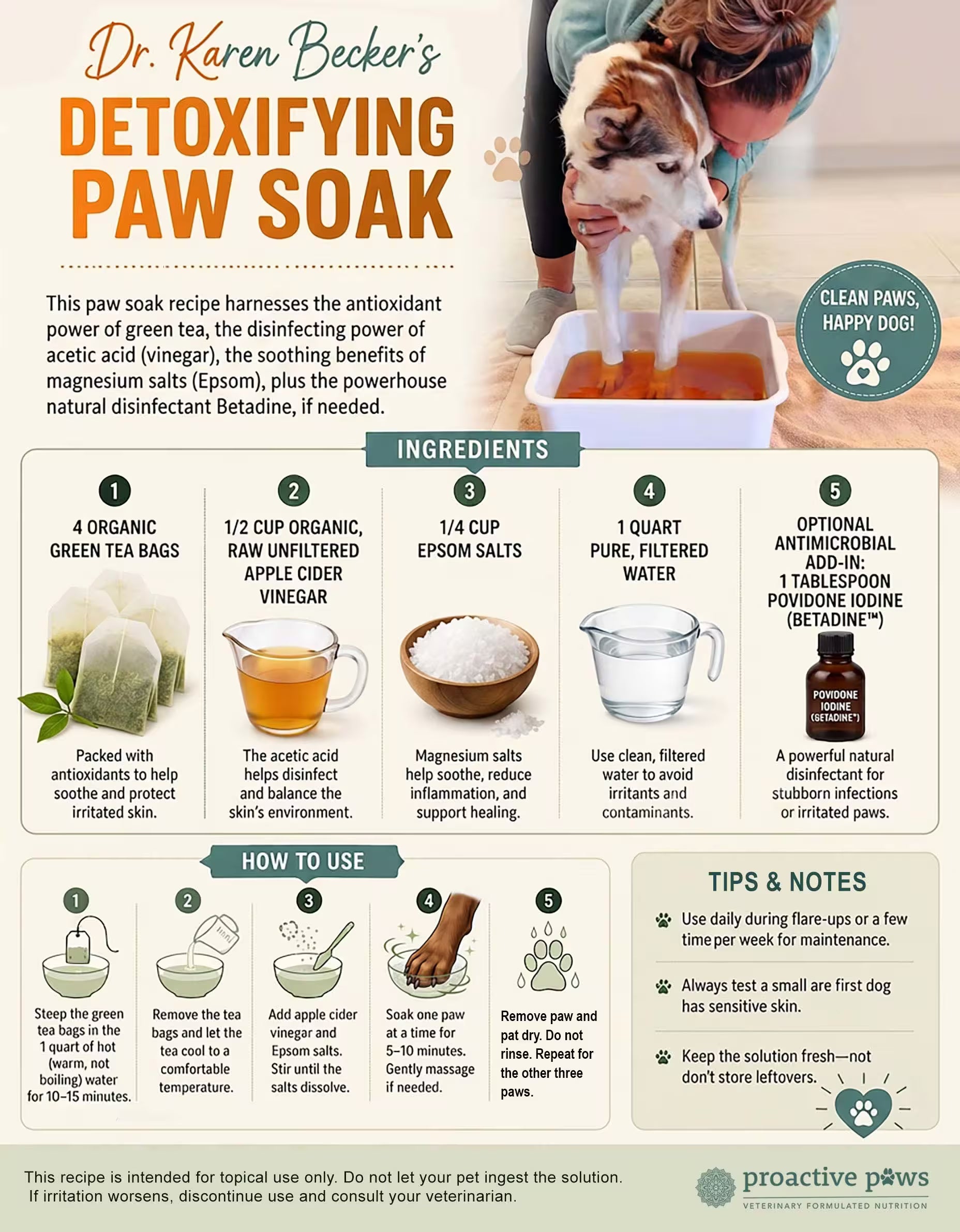
A Simple, Natural Solution: Foot Soaks
The most effective way to reduce the burden of environmental chemicals and allergens your dog comes in contact with is to disinfect the point of contact: her feet regularly. Soaking your dog’s paws is very different than simply wiping paws. Also, wiping with a cloth doesn’t reach deep between the toes or nailbeds where irritants hide, and it won’t actually reduce the level of irritants on the skin; it just redistributes them.
There are many ways to do foot soaks depending on your dog’s size and temperament. For large or medium dogs, use a bucket to soak one paw at a time. For small dogs, a sink or shallow basin works well.
Final Thoughts
Allergic skin disease in dogs is a systemic condition, with the gut lining sustaining measurable injury right alongside the skin as disease severity climbs. Research reinforces the idea that chronic allergies aren't simply a skin problem; they're a reflection of whole-body inflammation involving the immune system, intestinal barrier, microbiome, and skin working together.
That's why successful allergy management doesn’t come only from changing shampoos, medications, or supplements alone. When we support the gut, nourish the microbiome, reduce inflammation, feed a fresh anti-inflammatory diet, and strengthen the body's natural barriers, we're giving our pets the best opportunity to heal from the inside out.
The healthiest skin begins with a healthier gut.
Sources and References:
- 1 Ural, K., Erdoğan, S., Erdoğan, H., Pasa, S., & Özalp, T. (2026). Leaky gut and intestinal mucosal injury among dogs with clinically subclassified atopic dermatitis. Brazilian Journal of Veterinary Medicine, 48, e011725
- 2 Harvey, N.D., Shaw, S.C., Blott, S.C. et al. Development and validation of a new standardised data collection tool to aid in the diagnosis of canine skin allergies. Sci Rep 9, 3039 (2019)
- 3 Schnedl WJ, Enko D. Histamine Intolerance Originates in the Gut. Nutrients. 2021; 13(4):1262.
- 4 Animals (Basel). 2025 Aug 4
- 5 European Journal of Allergies and Clinical Immunology 11 May 2026
- 6 Izquierdo-Casas J, et al. Diamine oxidase (DAO) supplement reduces headache in episodic migraine patients with DAO deficiency: a randomized double-blind trial. Clin Nutr. 2019;38(1):152-158
- 7 Frontiers in Pharmacology 19 November 2025
- 8 Front Microbiol. 2022 Feb
- 9 Integr Med (Encinitas). 2020 Feb
- 10 Cell Mol Biol 2013 Nov
- 11 Animal Journal Vol 5 Issue 2
About Karen Shaw Becker, DVM, CVH, CVA, CCRT
Veterinarian Dr. Karen Shaw Becker believes biologically appropriate food and an animal's immediate environment are essential in determining health, vitality, and lifespan. She has spent her career as a wildlife and exotic animal veterinarian and small animal clinician, empowering animal guardians to make intentional lifestyle decisions to enhance the well-being of their animals.


